Tracking the origin of obesity

One of the main contemporary questions of global interest is understanding the origin of obesity. While the scientific community is ardently discussing the issue, they have not yet come up with a single answer. There is consensus, however, that this metabolic imbalance is of interest to both public health and the economy. In recent decades, the prevalence of obesity and type 2 diabetes has increased everywhere.


Since individual behaviors hardly may influence statistics, there is agreement that obesity is the result of interactions between the genetic information of the organism, known as its genotype, and the environment, including cultural behavior patterns. For some authors, behavioral patterns are the key to the phenomenon. However, it is logical to assume it also operates a certain predisposition to the development of obesity, which would be linked to our evolutionary past, although there is a wide debate on the precise nature of the processes that contributed to generating it.


One of the first hypotheses formulated to explain the genetic roots of this collective phenomenon was postulated in the early 1960s by the American geneticist James Neel (1915-2000). His theory is known today as the ‘thrifty genotype’ hypothesis, and suggests that obesity is a heritage from our ancestors in whom evolution favored genes that favor energy storage (those genes are said to have been positive selection object).


The thrifty genotype would have been beneficial to hunter-gatherer populations, as it would have allowed them to gain weight rapidly in times of plenty and be better adapted to survive in times of food shortages. This hypothesis is based on the idea, widespread in the literature on human evolution, that hunter-gatherer societies suffered more frequent famines than societies with other livelihoods, for example, farmers, and had to adapt to periods of food shortage. This genetic capacity to adapt to the periodic lack of food would then have favored the current obesity epidemic in populations in which said food shortage is no longer present.


However, there are few studies to support the claim that hunter-gatherers have suffered more hunger than other societies.


An alternative view, called the predation-release hypothesis, argues that the prevalence of the thrifty genotype would not be the result of positive selection for genes related to energy storage, but would result from having freed our species from the pressure caused by living under constant threat of natural predators.

This latter theory was formulated in 2007 by British biologist John Speakman of the University of Aberdeen, who argued that at the dawn of humanity about two million years ago, Homo habilis and Homo erectus (ancestors of modern humans) acquired the ability to use fire, to produce stone tools and weapons, and to group together in organized social structures. In this way, for the first time in the evolutionary history of animals, a species had the possibility to control and even eliminate the threat of predation.


The genotypes that are most successful at evading predators are those that confer speed, agility, endurance, athletic ability, and leanness. In the days when incipient humanity was subject to this threat of predation, these genotypes would have prevailed and even eclipsed those related to energy storage. But, once that threat disappeared, such genes were no longer indispensable for the survival and reproductive success of human beings. In the absence of selection pressure due to predation, genes that promote energy storage were not overshadowed or eliminated by natural selection: they simply drifted and facilitated the obesity pandemic in modern societies.


Although both the sparing genotype hypothesis and the predation release hypothesis have considerable merit, and perhaps account for a genetic predisposition to obesity in part of the human species, they do not decisively explain the contemporary pandemic in industrialized countries . This is due, among other reasons, to the fact that the genetic predisposition to obesity is not the same in the different ethnic groups, whose ancestors in turn experienced different environmental selection pressures.


It can be concluded, then, that both hypotheses would not be a faithful reflection of the events associated with human evolution, since both hypotheses assume that all individuals of the species would have been subjected to the same circumstances throughout their evolutionary history. This assumption does not consider the selection effect of the different and specific geographical conditions for which Modern humans transited from the time they left Africa some 70,000 years ago.


In those 70 millennia, modern humans spread across the globe: they populated Asia, Oceania, Europe, and America, where they inhabited a wide range of environments and climates. Large-scale studies have revealed a considerable number of genetic changes or variants that occurred as a result of natural selection that underwent the varied contemporary human populations in the last 10,000 to 15,000 years. These antecedents would suggest that exposure of diverse populations to differential environmental factors could be linked to genetic variants that confer different degrees of susceptibility to obesity. Some examples are changes that confer resistance to malaria in populations that live in defined geographic areas, or that favor lactose digestion, or that modify skin pigmentation, and even influence susceptibility to HIV infection.


Scientists recently postulated that the ability to regulate body temperature in extreme hot or cold climates confers a powerful survival advantage. In this sense, the genes responsible for thermoregulation would be of greater importance than thrifty genes, since they would allow an individual to survive to reach reproductive age. One of the main driving forces behind the global spread of mammals, 65 million years ago, is believed to be the ability to produce heat through specific proteins present in brown adipose tissue. This ability is thought to have contributed to placental mammals inhabiting every corner of the globe.


At the time of birth, human babies possess abundant amounts of brown fat, which represents 1.4% of their total body weight and plays a critical role in the thermal regulation of infants and young children. Brown adipose tissue is capable of generating heat thanks to a process known as thermogenesis. The energy produced by the mitochondria is released in the form of heat instead of being used to generate ATP, a process by which the body consumes stored triglycerides, breaking them down into their constituents, glycerol and free fatty acids. Therefore, an increase in the expression of genes linked to the metabolism of brown adipose tissue would confer an adaptive advantage in cold climates.


The ancestors of modern humans (Homo sapiens) and Neanderthals (Homo neanderthalensis) separated from a common ancestral population between 800,000 and 400,000 years ago. Neanderthal man is an extinct species of the same genus as us, who inhabited Europe and parts of Western Asia from about 230,000 years ago to about 30,000 years ago. It was a species well adapted to the extreme cold of the fourth and last ice age. It was long assumed that the most successful migration of modern humans out of Africa dates back to around 70,000 years ago, as inferred from archaeological and genetic records. However, it is currently believed that there were waves more than 100,000 years ago, that populated Oceania and some regions of the Americas, although those that reached America would have become extinct and would not be ancestors of current populations. Modern humans quickly spread to all continents and coexisted with Neanderthals in Europe and Central Asia for thousands of years.


There is evidence that fragments of the Neanderthal genome persist in contemporary humans, showing that there were crosses between both species. Comparative studies of the nuclear genome of remains of both species indicate, in effect, that current human populations settled outside sub-Saharan Africa contain genomic regions very similar to those of the Neanderthal. In each individual, these regions represent between 1 and 4% of the total genome. It is striking that while this frequency is approximately constant in all populations today living outside of Africa, the proportion of the Neanderthal genome is tripled in populations of European descent in genes related to lipid catabolism. Arguably, then, the genetic variants that evolved in Neanderthals would have given a selective advantage to modern humans who settled in the same geographic areas.

The contraption to separate humans

Health sciences underwent a radical transformation from the discovery, in 1953, of the structure of DNA. Since then, scientists have made important advances in relation to understanding the functioning of DNA. In 1990, was created the Human Genome Project in order to coordinate research that aimed to identify all genes in human DNA and determine the order of the three million pairs. On 2001, the first draft of the human genome map was published, the one that identified most of the human genes.

From this discovery, patents on human genes have multiplied year after year and have been, since the first ones were granted, subject of debate. The economic interests that are at stake in this field, especially in regions such as North America and Europe, have led to a considerable increase in the number of patents on materials and processes used in biomedical research in recent years. The protection of knowledge applied to human genes has been achieved mainly through the patent system, although it should be noted that other devices, such as trade secret and confidentiality agreements have also played an important role.

Patents on genes, human cells, stem cells and proteins are contemplated by international laws. However, many countries limit its scope as a way to minimize the negative impact that its capacity can have on health care costs, to reduce inequality in access to treatments that arise from these discoveries and preserve the Free flow of information in research. One of the most resonant cases of patent limitations on human genetic material is that of patents on the BRCA-1 and BRCA-2 genes.

BRCA1 and BRCA2 are human genes that belong to a class of genes known as tumor suppressors. In normal cells, the BRCA1 and BRCA2 genes affect the stability of the cell’s genetic material (DNA) and help prevent uncontrolled cell growth. Mutation of these genes has been linked to the development of hereditary breast cancer and ovarian cancer, so the identification of mutations is important for early diagnosis and follow-up of women who have higher risks.

Myriad Genetics Inc., a molecular diagnostic company, in collaboration with the University of Utah, in the United States, were the first to sequence the BRCA-1 gene and applied for patent protection in 1994. In 1997, along with the CHUL Research Center in Canada and the Japan Cancer Institute, granted them a patent on an isolated DNA sequence encoding a polypeptide, thus asserting their rights over a series of mutations in the gene and about the diagnostic methods associated with its detection. Other applications of the patent were together with the second gene, BRCA-2.

But appear oppositions to patents on the BRCA-1 and BRCA-2 genes and their derived applications. The first of the rejection requests was filed against the European patent filed by Myriad on the isolated BRCA-1 gene.

On this occasion, the claim was presented by a large group of associations and representatives from different states, who opposed the permit: the Social Democratic Party of Switzerland, Greenpeace Germany, the French Curie Institute, the Association of Public Hopistals of Paris, the Society Belgian Human Genetics, the Netherlands (represented by the Ministry of Health) and the Austrian Federal Ministry of Social Security, among others.

The central argument of his claim against the fact that Myriad Inc. was granted the requested patents consists in a challenge to their validity on the basis that it did not meet the patentability criteria of the European Patent Convention. They argued that the invention lacked both novelty and industrial application and that, in addition, the patent did not disclose the invention sufficiently for one skilled in the art could replicate it.

Following this resonant case, the European Parliament expressed concern in a 2001 resolution against the patents of Myriad Inc., encouraging the European Patent Office to the principle of non-patentability of human beings, their genes or cells in its natural environment and stating that the human genome would be fully available for research purposes. This case influenced the evolution of the French Patent Law.

The Myriad case has aroused more than a decade ago a debate that continues today. This case, like no other, attract public attention, in addition to the international scientific community, towards the need to delineate clear policies around the patenting of human genes in general and, more specifically, in the patenting of genes used in the diagnosis of certain inherited diseases.

Criticisms against the validity of patents obtained by Myriad can be classified into different groups. The most important is that which focuses on the idea that human genes, in general, and especially the BRCA-1 and BRCA-2 genes do not have the patentability criteria that require an invention to occur. Patents have been for over a century to protect a wide range of inventions, including new medicines, new materials and new machines. Natural phenomena such as electricity or wild plant or animal species are not considered inventions but discoveries, so they are not eligible to be patented.

The detractors of these patents indicate that in the case of granting permits to Myriad Inc. it was a discovery and not an invention, since no intervention by researchers is needed for gene mutations to possess the functions that they possess.

However, proponents of these patents argue that the very fact of patent laws affected in several countries patenting human genes implies that the action of isolating a particular gene is implicitly a sufficient intervention to qualify genes as inventions. While the products of nature, in the way they are presented in it, are not patentable, if they are the results of the processes of isolation, purification or modification of genes and gene sequences.

Proponents of gene patents argue that one of the biggest advantages of these is precisely that they generate income that encourages the development of new treatments that ultimately improve the lives of people in need. The development of these investigations, the final result of which is often uncertain, depends on the investment of a large capital, for which a compensation is legitimately intended: companies engaged in biotechnology are held under the expectation of future benefit

However, patents in themselves do not have an improvement in global health. High market prices limit access for people who need to have patented treatments and treatments for diseases that primarily affect people living in poor countries and that do not represent the most profitable markets: the price of these tests It has risen despite the technological advances that are available today.

Issues about the science

It is clear that scientific knowledge has a «superior» status in the developed societies of the West. In this sense, British-Australian science philosopher Alan Chalmers points out that human undertakings appropriate the «science» label to gain prestige.

Now, where is this evaluation of the scientific among citizens from? While there are critical voices around various harmful, elitist or authoritarian aspects of science, most people seem to assume, in a rather naive way, scientific activity consists of discovering pre-existing truths about the world that once discovered remain «scientifically proven» and become indisputable.

In the last fifty years it has been pointed out, from various academic fields, that this common sense opinion about science is wrong and pernicious, because it is strongly without judgment and based on superficial or non-existent characteristics of the activity in question. Scientific activity, according to the most modern and powerful epistemological visions, consists rather in building models on the world, that is, in developing theoretical ways of representing and interpreting physical or cultural reality in order to understand, control and transform it. Thus, the models that are constructed are not immutable truths, but ways of seeing the reality that are changing according to the available evidence and according to the ideas and interests of scientists and, more generally, of the whole society in which science is develops However, these ways of seeing the world, provisional, loaded with inventiveness and culturally situated, are not arbitrary, they arise from a very fine interaction with observations and the results of experimentation and other situations about phenomena.

Now, with this less dogmatic view of science, some authors argue that, then, scientific knowledge is just one more way of seeing the world, such as philosophy, poetry, oral tradition or intuition; one of many ways to «appropriate» reality and, moreover, a way that is not especially more valid or more rigorous than the others.Reality, in case of existing, we do not have reliable access to it, perhaps, there is not even a reality independent of our interpretations. From these «relativistic» perspectives, scientific discourse would not be closer to reality than, for example, common sense, myths, legends, ritual practices or religions. The relativistic view on science, beyond providing valuable elements of criticism to the dominant scientism, fails to account for the interventive and transformative successes of scientific activity, which, as we said, are firmly supported by the substantive relationship between the theoretical discourse and empirical reality.

Assuming that there is an external and independent physical reality of the observers, and that this reality is recognizable (although in an always provisional and mediated way), at least two major questions arise: 1. Is scientific knowledge more valid than other types of knowledge to access that reality? 2. What determines whether a socially established knowledge system is scientific or not?.

Since the privileged status of scientific knowledge translates into economic benefits, power, visibility and social prestige or government support, many forms of knowledge aspire to the title of «scientific» to enjoy those benefits. This is a compelling reason, socially very relevant, to try to distinguish what is science and what is not. For example, governments authorize, support and finance medical practices that are believed to be scientifically endorsed. How do we decide that they should be included among those practices?.

If the reader of this post has answers to any of these questions, you are welcome to share them.

Allegory of science by Sebastiano Conca

Fear moves the world

The reflection on what man is goes back to the origins of Western philosophical thought, such information about what constitutes the human thing was, paradoxically, a consideration of the animal. Man always needs to be reflected in the animal to find what is his own. In ancient times man sought to recognize human traits in the animal; while modernity separates the animal that it has in man and excludes it from itself.

A perspective of analysis of the modern vision is to focus on the werewolf, that is, the wolf that becomes a man (citizen) and the man who becomes a wolf. The werewolf points to two mutations. In the first case the beast that inhabits man is put aside; for this way to present man at a distance from bestiality. But this operation of exclusion, rather than showing the difference, points to the relationship between the human and the monstrous. Hence the explanatory richness of the figure of the werewolf, since the monster is not exterior and pure alterity with respect to man, but rather an externalized interior of the human.

The second mutation is the constant threat of lupification to which he is exposed to man. The becoming wolf of man not only shows the instability of that being called «man», but also, the constitutive monstrosity that inhabits it and the fear that this generates. The werewolf is no longer on the margins of the community of men, but is inside, inhabits the city.

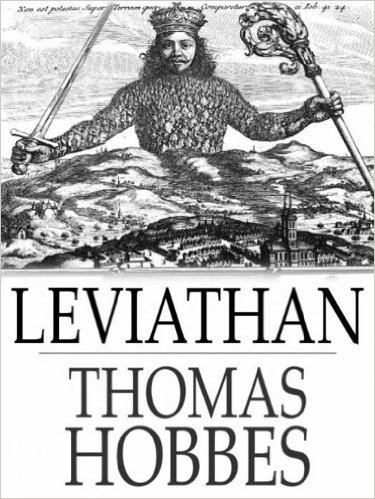
Hobbes writes the famous sentence «ThatMan to Man is a kind of God; and that Man to Man is an arrant Wolfe». In this way he points to the transformation that occurs in man with the social pact, that is, the transition from the beast man to the god-man. While the man in the state of nature It is like an animal, but wolf when creating the state it becomes more than mere man, it is a citizen.

Now, the starting point for the construction of the State, as is explained by Hobbes in Leviathan (1651), is fear in the state of nature and its goal is the security of the civil State. Hobbes takes up the mythological sea monster Leviathan (Genesis I). Leviathan is for Hobbes the representation of a civil state to which we owe obedience in exchange for security. In this sense, he said that Leviathan is “that mortal god, to whom we owe our peace and our defense. Because by virtue of this authority that is conferred on him by each particular man in the State, he possesses and uses so much power and strength, by the terror he inspires he is able to conform their wills for peace».

To establish his theory of the State, Hobbes starts from the original «war of all against all» situation that is supposedly characterized by the condition in which man finds himself in the state of nature. Such a scenario is a logical hypothesis, that is, it has no claim to historical truth, however, it allows it to represent the pre-political situation and the origin and foundation of power. But, in addition, the presence of this reasoning about the state of nature within the theory of the State specifically expresses the incompleteness of the political artifice, always keeping alive the «memory» of the original conflict.

According to Hobbes, the original war is a consequence of the equality that men present by nature. It is an equality that, far from establishing harmony, generates competition among men and leads to destruction itself.

This state of mutual threat because of the original equality becomes a central element of Hobbes’ reasoning, since such circumstance brings fear. For Hobbes it is due to the fear that reigns in the state of nature, fear of being killed, that men create the State through the social pact. But for the State to establish the conditions of peace, a decision-making instance that imposes order is necessary. Consequently, fear becomes the cause not only of the social pact but also the foundation of an omnipotent state.

Thus, in the face of fear caused by the equality of the original condition, it is necessary to oppose the power of Leviathan in order to achieve security.

In effect, the State does not eliminate fear, but stabilizes it. The original fear that characterizes the state of nature becomes an artificial fear, fear of the State that can only protect under the threat of sanction. In other words, possibly a transition from «reciprocal», anarchic, to «common», institutional fear. Therefore, in the State the fear does not disappear, but becomes «safe», there is a «rational stabilization of fear.»

The wolves before frightened by a reciprocal fear, by the power they possessed to use their forces, are now men frightened by the power that they themselves confirmed to the State.

As can be seen, there is a close relationship between the Leviathan and the werewolf, while they are two monstrous figures that appear together or, to be more precise, it could say that it is the werewolf who gives rise to the Leviathan. It is a complicity between both monsters, a complicity that has been sealed by the threat of death and terror. Leviathan can only guarantee life among citizens if men renounce their natural right to be wolves, however, it is a life that is still exposed to death, now abandoned to sovereign violence.

Leviathan stands at the moment when wolves transform into men. But this does not mean that the wolf, the bestiality that inhabits the interior of man, completely expelled. On the contrary, there is a permanent threat that the wolf becomed man will become a wolf again. It is due to this latent metamorphosis that the existence of Leviathan is legitimized, the great monster that subdue of the individual monstrosities, that is, werewolves.

«Think» the imagination

Although imagining is not something new, it is true that throughout the ages it has been transformed enough to give rise to a new problematization in different movements. During the twentieth century, the imagination had a privileged place in the conceptual debates about its impact on literary, philosophical, psychoanalytic and political writings, among others. This prominent position has a lot to do with the questioning of certain bases that had so far sustained the West, because with the suspicion besetting other human faculties (the suspicious purity of reason and perception), the imagination could come off relatively of the subordination to which it always was once. Released to some extent from the yoke of the western «logos», the imagining ability is revealed as a fruitful conceptual operator to capture some dynamics in force at the time when the human is not enough to count of what happen in the world.

Everything seems to indicate that the figure of «human» is a fiction among others and that subjectivity is part of a broader process. The empire of humanity over reality cannot be sustained except by ignoring a whole series of dynamics (cultural, political, linguistic, economic, desiring, etc.) that completely exceeds and of which it is actually an effect, a product, a result. Thus, the «I», the «conscience» and its «will» no longer have in the principle that founds the meaning, but rather in the marginal areas of the experience, as a random and even dispensable byproduct of a mysterious world. While this perspective has been discouraging for those who can only conceive the world in the form of a building of solid foundations, other views have overcame the initial restlessness, in the attempt to explore the new territories open to experience. Especially in the arts,what is revealed is the research for renovating the modes of access to the world, for investigating the very notion of experience when the subject loses its central place.

With the rupture of the humanist axis, which implies the displacement of the rational consciousness of the constituent and founding place of the real, one of the forces that emerge is that of the imaginary («non-human» force, then).

It is in the twentieth century that the imagination begins to be invoked to explain all kinds of social, political and literary phenomena. From the more «sociological» notions of imagination, until they take the imagination as an ontological concept (that is, of creation in a strong sense, invention of being) from which to organize a description of social life and at the same time a strategy revolutionary politics.

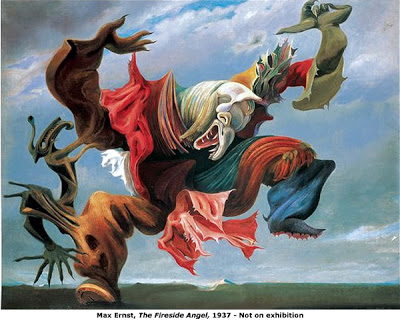
Max Ernst painting

The word as a tool to recover the personal universe

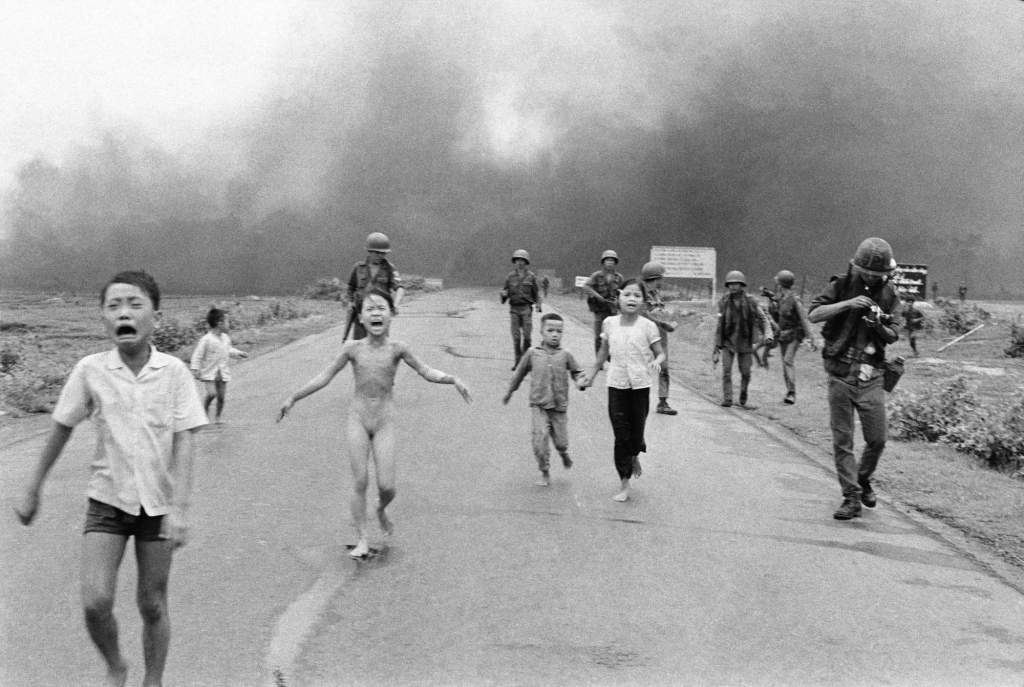
The war is traumatic. Not only for the material bullets that hurt the bodies, but also for the fact that their blows hit the heart of symbolic resources, the only plot in which a person can take place. The core of the traumatic lies in this being devoid of the imaginary-symbolic veils versus the real.

In war, the resort to violence is the sign of the failure of the symbolic universe of a human community.

After the war the damage persists at different levels in the silence of the victims regarding the suffering and in the difficulty in finding interlocutors who can succeed in lending an ear to the terrible. The trauma will persist until to find another to talk to.

The horror of exposure to the real without processing can only be conjured with the recontruction of scheme of the symbolic universe. This means that it must possible to establish a social bond. Its establishment cannot consist in specifically allying itself with others in a common cause, numbing the singularity itself in the identification of an illusory collective that compacts itself by denying all fissure and projecting all the fault outwards, in the imaginary construction of an enemy. This deficit figure of alterity is usually a resource at hand in the face of the blow by war to the possibilities of the social bond, but it is not able to restore it to the extent that it supposes an illusory silence of one’s own singularity. Talking to another is only possible from this emptiness constitutive of subjectivity. And establishing a social bond means finding another to talk to.

It will be after the war, and facing its perverse act of replacing the word with the act and its explosion of the foundations of the desired structure, to reopen the paths to the word, so that something can be said to someone which can be heard, so that, around that irrepresentable, they can be inscribed border letters that have access to the discursive circulation.

1972 (AP Photo/Nick Ut)

Truce between psychoanalysis and Neurosciences

Psychoanalysis is one of the main therapeutic orientations in the field of mental health. However, in recent decades the greatest influence of biological psychiatry, inspired by neurosciences, and psychological currents with greater affinity with it, such as cognitive-behavioral psychology, is notable.

Under this scenario, recent years have witnessed problems, counterpositions and articulations among psychoanalysts, psychiatrists and / or neuroscientists about the validity of methods in the conception and treatment of mental illnesses.

The opposition scientific knowledge versus theoretical speculation resting on the value construction of science as access to a true knowledge about the nature of the human being that allows an effective intervention in the sufferings. From this approach, the absence of scientificity is the main criticism to psychoanalysis.

Oppositions extend to therapeutic strategies: on the one hand, psychoanalytic criticism of the extensive use of psychotropic drugs in the context of criticism of the medicalization of behavior.

On the other hand, the neuroscientific criticism about the attention of research and the control of psychoanalytic disorders calls into question not only the scaffolding of the theory but the effectiveness of psychoanalytic interventions.

The confrontations between both perspectives reproduce the subject-brain tension, inherent in the mind-body dualism that crosses psychiatry from its origins and that is expressed through the dilemma between a conception of man as a bodily and cerebral being versus a conception of man as being social and that speaking. While the psychoanalytic perspective conceives mental illnesses as a product of psychic life, the biological perspective conceives them as any other physical illness. Both involve different notions of person, different models of causality and different expectations of how a patient can change over time.

The contrast between different models of understanding of mental suffering (biological / subjective) is part of the work of purification, under which it is discussed if mental illnesses are physical or spirit conditions and if their therapy goes through analytical listening or intervention evidence-based psychiatric. The discussion itself reflects the work of separation / purification that occurs through these dichotomous constructions while an attentive observation of the intervention processes reveals the mediation work that brings together the «hybrid» objects created through the frameworks of both perspectives: The brain and the psychic life. That is, hybrid objects (real and built / natural and social) that come into existence through psychoanalytic and biological conceptual categories.

Despite the tensions between the two perspectives, the levels of purification that delineate their borders, and the mediation processes that dilute the dichotomies, a worldwide level assisted in a process of increasing biologization of psychiatric conditions.

The path that psychiatry takes from the 50s to the present is characterized by the passage of a psychoanalytic hegemony in the conception and treatment of mental illnesses to a biological hegemony. In this process, the gaze of the psychiatric knowledge on the problems of childhood, the responsibility of the parents and the Oedipus complex, towards the neurotransmitters, receptors and the route of chemical information in the brain. Through this passage there will be a hegemonization and universalization of American thought as a model of theoretical-practical organization of world psychiatry. The form that psychoanalytic thinking in the psychiatric field takes in each country makes a considerable difference when it comes to understanding the transformations from one model to another. Professional and economic interests, the role of the State in the field of health, cultural characteristics, disciplinary traditions, are just some of the factors that consolidate the differences in the dissemination of these approaches in each country and their subsequent transformation and / or coexistence.

From new technologies, life becomes a set of intelligible vital mechanisms, between molecular entities that can be identified, manipulated, mobilized, and recombined in new intervention practices, which are not constrained by the apparent normativity of A natural vital order. In this process, it is the same notion of biology that is disrupted, it is no longer a predetermined destination but is open to intervention, to the redesign of vital capacities. Consequently, the modern division between nature and society is resignified.

The molecularization of biomedicine allowed to show a biology open to modifications, in constant interaction with the environment. In that context, the scientific perception is generated that the environment creates stress that is literally written in the processes of cellular development.

In this context, the notion of plasticity result important as it indicates that life experiences may result in persistent changes in gene expression, and in brain structures. The notion of plasticity gives the place to processes of continuity between the psychological and the neuronal as long as it is understood that subjective experiences have biochemical marks, which in turn modify personality structures. In this interactive dynamic between experience and brain biology, the space for therapeutic change is produced, in which the joints between psychoanalysis and neurosciences are also inscribed

The notion of a plastic brain that modifies its structure and neural connections from the influence of the context enables specific discourses in particular in the field of education and psychotherapy. These ideas are plotted in the following newspaper article: “Plasticity demonstrates that the neuronal network is still open to change. You can always change what it was. Plasticity demonstrates the uniqueness of each individual, which is finally revealed biologically determined not to be fully determined by the biological, to receive the incidence of the other and of history, which makes each individual, to some extent, the modeler of his own brain» («Science is reconciled with Freud» La Nacion Newspaper).

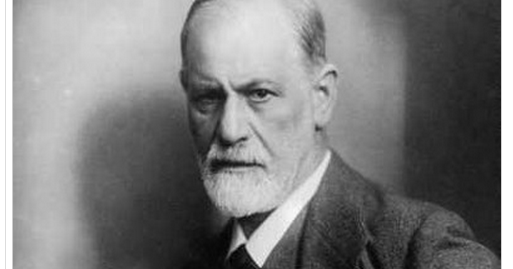
Sigmund Freud

Poetry that comes from Big Bang

According to the postulates of John Berger of 1972, we can affirm that the visible does not exist anywhere except in the set of images that the eye creates when looking. And, although sometimes the visible may remain hidden or alternatively illuminated, once the eye apprehends it, it begins to be part of our livelihood. At the same time, what we know or what we believe affects the way we see things. That is why, if we agree with Berger, it is easy to consider that our appreciation and perception of the image depending on the way we see it.

In front of the book of poems Big Bang of 1974, written by Severo Sarduy, it is central to analyze the perspective it presents on the image. The notion of bursting as a visual image and as a theoretical metaphor serves to think about writing.

Big Bang can recognize as a book of poems that can subscribe to an experience of aesthetics integrated to the mental experience of the artist. In this line, the metaphor of the explosion and the exaltation of color make up the axes central of the book. And from them, the figurative power of writing is questioned and its visual component is revalued. Hence, in Big Bang, allow highlight the game with the lyrical status of the poems, as observed in the case of those dedicated to dwarf stars, giants and vagrants. At the same time, in these poems there seems to be a comparison between couples of stars and human couples:

As is known, the number of double stars is very large: in a sphere of one hundred and twenty light years drawn around the Sun, in a total of forty-three stars there are at least ten couples, that is, almost half. It is rare for a couple’s star mass to be identical. The major star, evolving rapidly, becomes a red giant, while the smaller one remains a dwarf of the main sequence. If the couple is very close, then there will be a transfer of matter from the giant to the dwarf; The latter, seeing its mass suddenly increase, will warm up. (Big Bang, Sarduy)

On the other hand, the constitutive fragmentarity that the book entails is constructed from the accumulation of short notes. Some are organized in stanzas, others only appear as linear descriptions that aim to become objective. Sarduy mixes scientific records, free verses and journalistic comments.

Big Bang recrea bajo la construcción de una forma de ver centrada en el azar.

The Big Bang theory, as a scientific account that explains the origin of life and the universe, emerges in Sarduy’s book as an image that metaphorizes the initial instance of the bang. At the same time it recreates a starry landscape that translates into the fragmentation of the poetic language that simulates the original void and chaos:

...compare the lime of the marabuto with the cloth of a mercedarian monk, / with the snow under the antelope the salt of the fossil heron, / with the semen the Milky Way. (Sarduy)

Big Bang presenta un espectro astronómico soste-nido sobre la base del trabajo con los relatos científicos que narranel origen del mundo. A su vez, dicho relato está organizado temá-ticamente bajo un parámetro musical. Alude tanto a la improvisa-ción del jazz (Mood Indigo) como a la del flamenco.

For Sarduy, image and writing, constitutes emergencies, places where the signs design different suture orders in the composition of the real.

Severo Sarduy

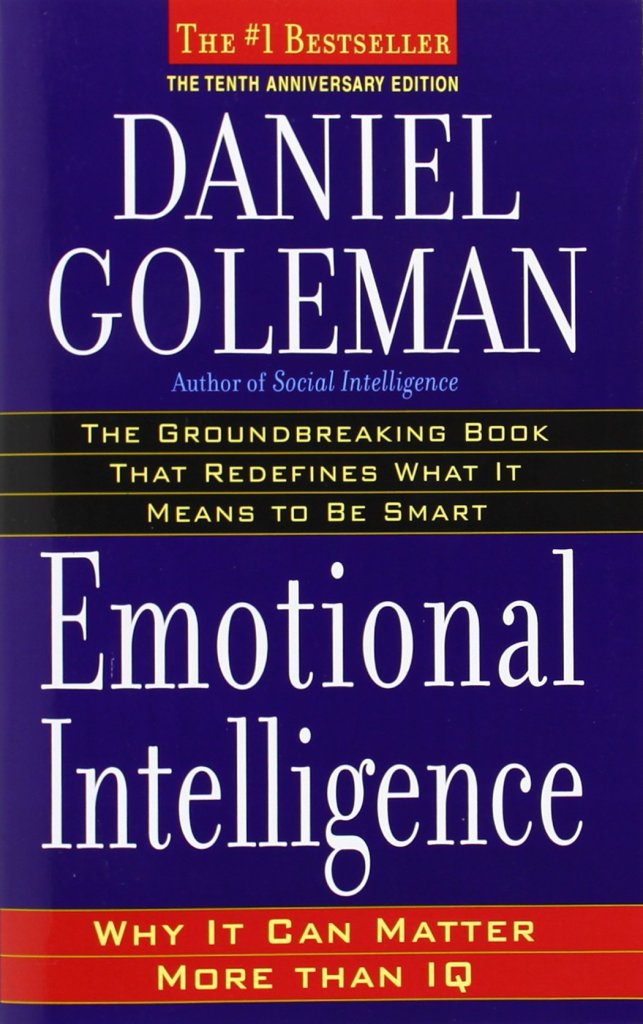
Emotional Intelligence: very useful but incomplete theory

Since its publication in 1995, the Emotional Intelligence book by Daniel Goleman has become an editorial phenomenon. It is on the list of bestselling books of The New York Times for more than a year.

The proposal of Emotional Intelligence revolves around the existence of two kinds of intelligence: the rational and the emotional. Goleman argues that at key moments in everyday life, when passions appear, «the balance leans: it is the emotional mind that dominates and crushes the rational mind.»

According to Goleman, the notion of Emotional Intelligence includes skills such as “being able to motivate and persist in the face of disappointments; control the momentum and delay gratification; regulate mood and prevent disorders from decreasing the ability to think; show empathy and hope». Based on this concept, Goleman states that the «emotional quotient» is more important than the intellectual quotient to achieve personal excellence. Thus, the author explain what it means to provide intelligence to the emotion and how to do it.

In the theory of Emotional Intelligence, Goleman conceives of the communicative exchange in relation to emotional skills. The author proposes that through the effective mastery of behavior, especially emotional abilities, any individual has the possibility of achieving optimal social performance. In this way, knowing and managing the emotional responses guaranteed success in interpersonal relationships.

Goleman states that each emotion has unique characteristics that distinguish each other. Therefore, each gesture that expresses these emotions also has a particular meaning, specifically of the context in which it takes place. Thus, in the anecdotes and the stories described in his work, the author places the emotions above the reasoning, while determining the basis on which his theory is based. Likewise, the psychologist develops a thorough description and classification of emotions, an end to anticipate one of the main arguments of Emotional Intelligence: it is possible to modify the emotional repertoire through an «emotional relearnment» (the ability to identify each feeling and channel it rationally).

For other specialists, and especially the members of the Palo Alto School, the social actors participe in a system in which all behavior releases socially relevant information. Then, when studying the way in which individuals interact, that count less the personal factors (their psychological nature, temperament, or humor) than the systems in which they are inserted: family, institutions, society, culture. These systems work according to a logic that can be formulated by rules external to individuals.

On the other hand, Goleman argues that those who are able to identify and master their feelings, that is, effectively handle non-verbal and body language, have advantages in relation to others. In the same way, these people have the possibility of becoming natural leaders characterized by charm, social success and charisma. In this way, Emotional Intelligence not only guarantees optimal social performance, but also individual satisfaction and productivity.

Theorists of the Palo Alto School consider that the interlocutors are not authors of the communication but participate in it. While they conceive of communication as an exchange that exceeds individual behaviors, determined to the individual as an element of that system.

On the contrary, Goleman describes the subjects as the main actors of their interactions, granting them supremacy in relation to the communication process. Thus, relying on discursive resources such as «identification», Goleman reinforces the idea of ​​»responsibility» of each subject in the episodes of his daily life.

For the authors of Palo Alto it is impossible to «not communicate» because even silence implies a meaning: «Activity or inactivity, words or silence, always have a message value: they influence others, who in turn cannot leave of respondent to communications, and therefore, also communicate”.

For Goleman, silence is «inexpressive», it is an absence of significance that must be corrected.

Goleman argues that people that unable to verbally express their emotions or feelings, are boring and cause uncomfortable to those around them. In this way, it conveys the idea that the inability to recognize one’s feelings and declare verbally will inevitably lead to personal failure in social relationships.

In this case, Goleman restricts communication only to verbal language, ignoring the communicating force of the multiple channels used by individuals to express their feelings, either consciously or unconsciously. These include silence, nonverbal language, gestures, body movements, and so on.

The positions occupied by participants in a communicative exchange will determine the «symmetry» or «complementarity» of the interaction: «the first is characterized by equality and the minimum difference, while the second is based on a maximum difference» (Palo Alto School).

For Goleman, a determining factor of personal efficacy is the ability to influence people’s emotional state: named «emotional brilliance.»

For Goleman, emotional intelligence allows the development of fundamental social skills, such as, «Relief of altered emotions of others.» The importance of knowing how to interpret and respond to the emotional keys of others, would allow to reach the «emotional brilliance».

For Palo Alto intellectuals, symmetry or complementarity are two basic categories into which all communicational situations can be divided, but they have no intrinsic value. Namely, «symmetry and complementarity in communication are not in themselves «good» or «bad» , «normal» or «abnormal «».

Goleman develops an implicit opposition between «verbal or rational language» and «gesture or emotional language,» that is, he does not conceive of communication as an «integrated whole,» but isolates each component of the global communication system.

Also, in the cases that Goleman analyzes in his book, he distinguishes «cause» and «effect» in these interactions. This particular way of approaching communicative exchanges responds to a logic of linearity. According to Palo Alto’s postulates, this logic is not possible due to the circularity of the interaction.

Also, in the book there are suggestions or general advice aimed at solving problems of daily life, in order to be put into practice by any individual. In this sense, the author does not take into account the social and cultural context where the exchanges of each person take place. While, according to the Palo Alto School, the multiplicity of communication modes is integrated into transactional systems, where the «context» is the only one capable of making sense of the elements that are part of it.

Hegemonic discourse

The medieval perception was based on a consideration of reality different from the current one, made of invisible immaterial truths. The reality of equality with materiality is a modern mental habit, far from medieval practices; both the natural and the supernatural were for the Middle Ages part of their daily reality, because they represented in themselves signs of a higher truth, of a sacred universe.

In the biographies of saints as a genre, which is not seen is not perceived as unreal; On the contrary, it sometimes has a more real character and even a distinctive materiality and that reinforces its condition as true.

According to the parameters of medieval holiness, each thing is not what it seems, but a sign of something else; in this way, material reality can oppose spiritual reality, which is ultimately constituted as true. This is explicit in many lives of medieval saints women in which the outer beauty must be lost to acquire the interior, which only it sees through corporal punishment, asceticism and penance as purifying and revealing processes of the most true of realities: the miracle as a sign of divine intervention in earthly affairs.

What undoubtedly characterized the medieval mentality was an inclusive awareness of simultaneous realities; realities that converged on the logic of the miracle as a point of contact between a natural world and a supernatural world perceived as part of divine creation, as concurrent manifestations of all harmonious.

The miracle intertwined simultaneous realities making the invisible visible, clarifying the hidden form of truth and revealing, in its narrative logic, a more inclusive concept of reality.

This medieval perception of simultaneous realities undoubtedly also determined the postulation of often contradictory models, as is the case with the vision of women held by narrators, poets or preachers in the period. The woman as a tempter and / or as a virgin introduce in many medieval tales. The model of repentant prostitutes represents a paradigm that fascinated the medieval.

The cult of repentant prostitutes carried out in Europe during the twelfth century in parallel to the increase in Marian devotion and undoubtedly proposed female models closer to the faithful. Faced with the impossible ideal of femininity that the Virgin Mary embodied, devotion parallel to the penitents was the possible response, although equally difficult to achieve, contributed to the development and advancement of feminine spirituality.

What repentant prostitutes represented the process of transformation from sin to visible grace in the opposing figures of Eve and the Virgin, dramatizing holiness as an arduous and complex process but possible for any sinner, beyond the seriousness of their sin . The dramatization of this conversion process will be a privileged vehicle in Europe for the exposition of Christian doctrine, since in developing acts of conversion, repentance and penance the legends of holy prostitutes communicated Christian doctrine to readers or listeners not as abstract concepts but as concrete experiences to be shared.

The miracle is the superposition, in the same scenario, of two distant worlds, the sensible and the supernatural, which manifests itself as an extraordinary phenomenon. If that scenario is the body of the saint, especially in the case of a holy woman, the identification of her whole life as a miraculous reality implies the loss of all femininity to make possible the spiritual growth that conveys the miracle.

Faced with the ambiguity of human language, the divine word assumes a character of truth related to the knowledge of those who remain hidden and with the know what will happen and be able to announce it even though it has not yet had. This divine knowledge, related to the power of the word, whether spoken or written, extends the essence of the miracle to the text itself as a possible divine intermediation, capable of calling holiness by its name and thus becoming its main testimony.

Diseña un sitio como este con WordPress.com
Comenzar