From poets to scientists

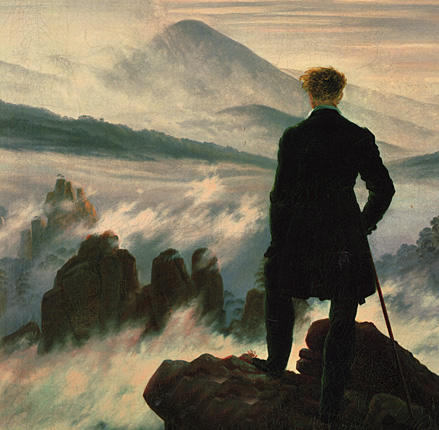
The observation of the sky is of the poets. It is possible that the writer front to Science is always an aspirant, but nonetheless, the writer is an observer of the imaginary of science.

Every 76 years on average Halley’s comet orbits around the sun, so large and bright that a simple view from Earth can be seen. This has been seen and recorded by astronomers since at least 240 B.C. This is how science confirms us. Clear documents of the comet’s appearances were made by different cultures, like the chroniclers, Chinese, Babylonian and medieval Europeans in the year one thousand, but were never recognized as reactions of the same object until the seventeenth century. In the year 1680 this star (first named as «Halley» in 1705 by the English astronomer who gives his name) passed through Mexico as a terrifying and apocalyptic monster for men. However, it was the poet Carlos Sigüenza y Góngora who wrote in his Astronomical Libra that the comets were not the cause of an omen, nor of males. Nor were they monstrosities of heaven.

It will also be the poet Andrés Bello who writes in 1848 a Cosmography or Description of the Universe, and although he enrolls in that generation of enlightened men, he does so in this case from a scientific discipline that no longer interests as much as it did in the century XVII. This, the Cosmography, consists of fifteen intense sections dating from the forms and physical constitution of the globe, the sun, the moon, the stars, the aeroliths; also of the operation of the planetary system, the gravitational force, of the day, the night, the weather, the seasons.

The cosmos has been there to observe it, to imagine it, but also to make with it and about it a poetic matter, always close to the abyss of thought or to the crashing of sensations. Auguste Blanqui already said, «This wave of comet effluvium, which wears the tongue in the act of defining its nothingness, would challenge the force that dominates the universe!».

Probably written around 1685 and published in 1692, Sr. Juana Inés de la Cruz presents us from the first verse of First Dream in the poetic experience of the cosmos: “Pyramidal, unfortunate, from the earth / born shadow, to the sky headed / vain obelisks haughty tip, / climb pretending the stars ”.

The first radio station in Mexico City aired on May 8, 1923, with a program that went out with the poet Manuel Maples Arce reading a stridentist poem about the radio: «TSH: the radio poem»: «On the night cliff of silence / the stars throw their programs / and in the reverse audition of reverie / words are lost / forgotten.»

The observation experience assumes a double value for the poet. On the one hand, he faces a dimension that makes him look towards an original experience, by the very fact of the words in the poem, with his verse cuts, appealing to rhythms, unconscious or archaic things that he cannot handle. On the other hand, he confronts the poet with what he always does not know, and therefore, imagines.

There is something still of mystery in that cosmos, something powerful in the air; and there is still some prophetic intolerance in the poets who look, who hear, and in the comets that pass.

Concepts interdisciplines that allow to understand the «bridges»

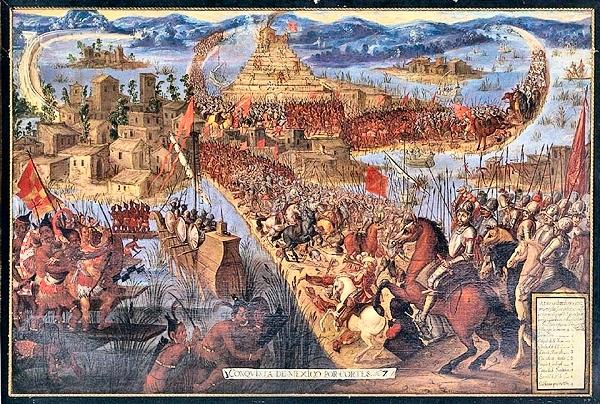
The Conquest of Mexico signed a new ordering of the geographical space for the Spanish Crown. The Spanish Empire saw a future without comparison at the time Cortes reported his discovery. But the conquest of Mexico was not a journey of a group of Spanish with luck, but in the interactions with the natives, Cortes found the strategy mark of this company, since he understood that without them they not advanced in unknown territory. That advance over an already inhabited territory involved an interaction that defied occupation.

George Simmel explains that the importance of sociability events (positive or negative) is not in the space in which they occur or because of their dimensions, nor are they specific for the remoteness or proximity of the actors, but for «The linkage and connection of the parts of space, produced by spiritual factors.» That is to say that the interactions are not controlled by the places where they occur, but by the same human factor that fills the gap «between» both actors.

One of the characteristics of the space is its relationship with sociological and cultural limits because that give guidelines on the inclusion or exclusion of others. As Michel De Certeau explains, space is a practiced place and every story is a travel story, a practice of space. Many chronicles of the Indies are a definitive example of this idea, like Cortez’s letters, since as the conquest advances over the foreign space, the same thing happens in the story and in the construction of a new space, now its own. That is, it is write while advancing. Movement and writing are simultaneous because the interaction with the new determines it. Thus, in the process of delimitation of space, it recognizes the excess, spillage or overflow of these limits from the notion of «bridge» or «border.» One of the spaces is legitimate and the other is foreign or foreign.

Homi Bhabha conceives the idea of ​​a «third space» as a space of a threshold from the architectural work of the American artist Renée Green. A staircase, a bridge, a portico, a passage or a membrane are some examples of the symbolic interaction between fixed identifications. These interstices set up paths or passages between generally opposite binary systems. Third places or between-places include in themselves the elements that give rise to them. They behave like crosses where two or more different identities are recognized, which become more indefinite, but where new frictions are also generated. These spaces «in between» provide the ground for developing identity strategies and innovative collaboration and questioning sites, in the act of defining the idea of ​​society.

Edward Soja, a political geographer dedicated to postmodernity and his spatial organization, conceives the term third space from the ideas of Henri Lefebvre in The Production of Space 1974 and the relationship between spatiality, historicity and sociability. He propose three dimensions of spatiality, but not separate spheres, but ways of conceiving it from different perspectives. The first space is that of physical-material experiences and relationships; the second, that of mental representations or productions on space. The third space is, then, the congruence of the first two dimensions. It has, then, both material and imaginary experience to produce new subjective understandings and integrates the two previous spaces and extends them in scope, substance and meaning. If the first is the field of perception and the second is the field of conception, the third space is the field of experience.

Human insensitivity as normality

Kracauer’s novel, Ginster (1928), reverses the burden of vitalism to revolve around the feeling of death. But death is not presented as transcendence or covered of a sublime halo, but accompanies the war that, as a scenario, frames the misadventures of the subject Ginster.

The question for life is in the narrative an answer through the centrality of death that nevertheless remains attached to a material core, the figure of the old woman towards the end of the work indicates the presence of death: “ She did not invite him with clear words, but smiled wryly. In any case, the mouth wide open, toothless, could only imply a wry smile. Like an imposing crater, his mouth opened in the white dead landscape of his face». But unlike the consecrated idealistic interpretation and its expression of a relationship between life and death with overcoming pretensions, death in Ginster appears as the enigma of life. So the feeling is put in brackets: the Ginster character does not generate identification in the lowest or the best of his behavior, irony works for it. Thus, to avoid sentimentality and identification through feeling, Kracauer makes his protagonist a coward.

Also if you consider the last chapter not resulting representative of the novel, the death of the uncle confirms the centrality of the existential theme that is reinforced in the last words of the story: “In bed he puts a reflection on what war will beginning now. He cried of fatigue at the thought of the dead uncle, himself, countries and human beings”. Here the connection between the meaning of death, the sense of existence (or its absence) that is evidenced in modernity and its conception of the human is clearly expressed; but what the construction of the protagonist has achieved is a distance that facilitates the explanation of the problem.

The Ginster biography produces a distance of feeling: even war, an episode that imposes the shock of feeling to its highest extent, is introduced to the distance and sometimes the arbitrary of a volatile and dispersed subject.

The component that Krakauer incorporates to achieve its objective of doubly destroying the ideological imprint of the biographical form and that of the «superficial opposition» linked to it, is that of surrealism. Kracauer endorses the surrealist revolutionary impulse, incorporating it not only as an aesthetic rupturism, but also as an element of ideological transformation that allows the restoration of the image of the human being. Thus, the march of history, the true foundation of bourgeois positivism in the biography, is broken down into the creation of the fictional character Ginster. That a fictional character writes his biography is already in itself a component of unreality that comes to show the fragility of biographical certainty. But unreality is here the redemption of the real, a passage towards the unmasking of bourgeois despair: the fiction of the biographical subject highlights the absurdity of the real war.

Another mechanism to which the novel appeals is also given by the title that puts into play a double unreality: Ginster is not «himself» and the novel is not written by Ginster. The fact that it is published anonymously reinforces this intention of Kracauer. With this device it achieves two objectives: on the one hand, destroy, through a game as a parody, the true appearance of biography as a mode of bourgeois expression, and secondly, introduce the problems of human feeling into fiction that refer to its existence: love, sexuality, death. This second point constitutes the constructive aspect that gives substance to the destruction of the foundation of the biographical form and is directed to thereby redeem bourgeois unreality. Kracauer seems to suggest the search for the meaning of existence as a movement of transformation of a fragmented world.

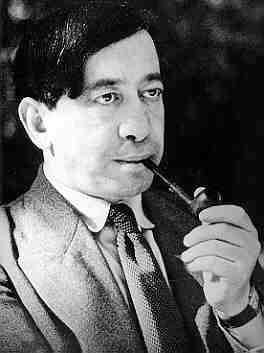
S. Krakauer

The miseries of men

Javier Cercas’ novel, Soldados de Salamina (Soldiers of Salamis) takes a double risk: inscribe in the literature on the Spanish Civil War the place of the «bad guys» and write a war story without heroism.

Cercas organize the story from the construction of the image of a character: Rafael Sánchez Mazas, poet and ideologist of the Spanish Phalanx and close collaborator of José Antonio Primo de Rivera (Spanish politician who founded the Fascist Falange Española or «Spanish Phalanx»). Cercas take the risk of writing about a fascist.

With this writing position, Cercas chooses to tell the story of the war without the heroic tales of victory or defeat. Adopt the look of an anonymous and defeated soldier.

In Soldados de Salamina, the Spanish Civil War is ending and the national troops are moving towards Catalonia. Republican troops withdraw, sweeping bridges and communication roads to protect their withdrawal. Sánchez Mazas is imprisoned in Barcelona, ​​and manages to escape a collective execution. Cercas chooses to speak from the place of the survivor and make an inventory of his author’s footprints without grandiloquent tones.

Cercas appropriates the will to make a book by Sánchez Maza and talks about the contradictions and ghosts that no one can name. Choose a figure outside its field.

The reality that the book exposes is that of the people who, unlike the Rafael Sánchez Mazas from whom history is plagued, do not glorify the war or the proposal as the panacea of ​​social miseries, nor do they believe that the truth of the Philosophy is in the mouth of a rifle.

The great character of the book of Cercas is the warrior of good causes by chance, a hero without wanting to or knowing it, who, disfigured by a mine after spending a life battling, survives as a prisoner in a nursing home of bad death, interrupted by a novelist determined to see epic and chivalrous gestures where the old warrior only remembers routine, hunger, insecurity, and the neighborhood of death.

The narrator of Soldados de Salamina insists that what counts is not a novel but «a true story.» The truth is another: Soldiers of Salamis is the story of his writing, the misadventures of his narrator. In this sense, Cercas deals with the memory of the witnesses and replaces his word in the legal memory. The author organizes «a real story», an inventory of reactions and personal feelings. Underground memories of soldiers become hungry characters, orphans of political convictions, defeated and fed up with war. Cercas moves away from a militant literature in terms of a speech mobilized in the name of a cause and accounts for the experience of war from the minimum, from the construction of almost unverifiable scenes in terms of historical documents.

Javier Cercas

Travel to write, write to travel

In the most famous travel stories, the object book was not always the original destination of this type of writing. Many of them were initially conceived as intimate diaries, personal memories, epistolary exchanges, travel records, scientific reports or journalistic reports, among other possibilities. On certain occasions, it has been the criticism itself that has recovered the scattered texts to do integral works with them.

The idea that every trip involves the transfer of a side by side, Michel De Certeau makes an initial differentiation between the notions of «place» and «space.» The place denotes a stable arrangement given by a combination of elements and the space refers to the set of operations that update the fixed coordinates and express the action of the historical subjects in this. De Certeau links the two notions from the discursive praxis exercised by the subjects on both terms. They are the ones that symbolically transform the place in space or space in the place, through two modalities: «seeing», which prioritizes the description of stable elements and takes the notion of place to build a «map», and the «go», which consists in the transforming action of a self that sets up a «tour» through the spaces it creates. De Certeau concludes by pointing out that the entire travel story implies a spatializing operation, encrypted on the interaction between map and route.

On this first definition outlined by De Certeau, which emphasizes the symbolic transformations of the subjects on spaces and places, it is possible to add the characterization that Tzvetan Todorov when trying to define what is a journey for Western civilization. Their statements enrich the issues by including issues related to the tension generated between those who travel and write and those who are seen and involved where they live.

Todorov says that the true travel story is made in exotic regions or non-European civilizations. These characteristics do nothing more than configure a notion of ethnocentric travel that conceives the culture of others as an element that can be analyzed and interpreted by those who travel and write. In fact, those who depend on the paradigm of the traveler are the European subjects who, from the Renaissance to the mid-twentieth century, travel through the unexplored world based on trade, wealth, conquest, knowledge or science. Therefore, Todorov concludes by stating that above all the travel story looms a colonialist look.

However, this reflection does not imply consideration to subsume any travel narration to a mere colonial operation. For example, James Clifford had a discussion with traditional ethnography and conceived the trip as a notion that allows destabilizing and complexing anthropological practice by discussing ideas such as the contrast between static inhabitant and traveling scientist, informant orality and specialist writing, interpreted cultures and interpreting cultures On the other hand, Marc Augé points out the importance of writing as a mediating instance that introduces a double distance, by splitting and linking, lived and narrated, interiority and others, and he ends relating the ethnographic method to memories, for his continuous unfolding of the self in the always deferred review of the contacts he had with others.

Beyond these approaches, there are works that address the issue from a specifically literary perspective. Among the vast bibliography referring to the subject, the contributions of Michel Butor and Beatriz Colombi about the writer as a traveler and the travel story as a genre stand out.

In the first case, Butor details that every travel story begins with literary works read or projected, develops with the reading and writing of texts and concludes with the final book, in which the trip is told. From the fact that for these writers traveling is a way of writing (and vice versa), Butor proposes the foundation of a discipline that studies the travel experience and, at the same time, a program that guides his story. Critical and poetic, how to think about the trip and how to tell it, are two axes of Butor’s proposal.

On the other hand, Colombi locates the travel stories at the crossroads of various discursive and generic regimes, which ends up constituting them as diverse texts mainly due to their heterogeneous nature.

Colombi considers a series of elements that structure travel stories through recurrences and reformulations. Among them, the main ones are: the plots (formation trip, grand tour, satire, picaresque), the tropes (the most frequent rhetorical figures), the topos (the spaces traveled), the topics (the images-themes set by the tradition, such as the melancholy of the trip or the conquering journey) and, finally, the narrator / author solidarity: a particular nexus through which the subjects who star, narrate and sign the texts appear to match, through a pact that the reader can decode as one of the most specific features of the genre.

The mystery at home

The Cat Inside, by William S. Burroughs, is an intimate diary, barely dated, based on the narrator’s relationship with many cats that went through his life.

His affection for cats is occasional, changing, multiple: there is no particular cat in which attention is focused, although it shows a certain predilection for Ruski, a cat «gray-blue with green eyes» that merits a story, the only one clearly identifiable within the book, in which he is caught by the kennel and happily rescued by the narrator.

In The Cat Inside, affection originates specifically in the seduction of movement. Cats can be loved because they resist interpretation, and resist because they are made of nuances infinite.

However, patience, dedication and crossbreeding … cats less than a kilo in weight, sinuous as weasels, incredibly delicate, with long thin legs, pin teeth, huge ears and eyes of a bright amber… a cat that is bright blue and electric that emits an odor of ozone … aquatic cats with webbed feet (go up to the surface with a trout in the mouth) … delicate, squalid and flimsy jungle cats with flat hooves – they can pass over the quicksand and mud with incredible rapidity … small lemurs with immense eyes … a scarlet, orange and green cat with fur reptile, vigorous neck and poisonous fangs …

Cats that parade through a The Cat Inside, come and go without further ado; just as they are born, they die, leaving the person in the same situation they found, with no balance in favor or outstanding debts. There are no considerations about the role of the kind, about the characteristic features of the pure race or about the convenience of one or the other; on the contrary, the mixture is exalted, the hybridity, the impossibility of knowing the origin. Cats appear as if by magic.

“The cat does not offer any service. The cat offers itself». Cat love is capricious, despotic, practical, decompromised; the writer insists that he does not know very well what he should give them, what is expected of that relationship, how to fulfill their role correctly. The enigmatic of its figure also permeates the interspecies relationship, marked by distance and mystery.

Burroughs is attentive to all the animals he meets, and is, above all, attentive of dogs, not only because it represents a bloody threat to his cats, but because they function as channelers of his misanthropy: “I don’t hate dogs. Yes, I hate what man has done with man’s best friend”.

William Burroughs

Experiencing the philosophy

Although the life and trajectory of Søren Aabye Kierkegaard is well known, it is interesting to highlight some relevant biographical aspects since the first thing that is found in the Danish philosopher is that biographical readings can be made of all his works.

Educated in Lutheranism, in the strong bourgeois imprint of the kingdom of Denmark, Kierkegaard cannot escape the romantic influence that comes through the German language and, even less, to the condition of cultural minority that drives him to transform sooner or later In an eccentric. In fact, the death of the father also means the impulse to conclude his thesis on the concept of irony, which is not exempt from being written in an ironic way.

The annotation in his Diary corresponding to August 11, 1838, record the death of the father as follows, as if it were a vital initiation: I consider his death as the last sacrifice of love he has made for me, because he do not abandon to me with his death but «has died for me» so that I can do something with my life, if that is possible.

Kierkegaard understood life as something irreducible, and at the same time turned away from it to show his writing at the risk of reducing it. In the annotations of the Diary there is an allusion to the irreducible of life: the bad thing is that only one mentally develops an idea, realizes that one lives it; The other day you had an idea to compose a Faust and only now I understand that I described myself.

The indiscernible experience indicates that ideas are not something abstract, but that they live, they produce something in the person; Moreover, as soon as person begins to think, ideas become meat.

In a long letter to his brother-in-law Lund, Kierkegaard points out the dilemma in which he finds himself: There are, so easy natures, that they capture at first sight the direction they must take and move calmly along the indicated path without being disturbed by the idea of that, perhaps, they could have chosen a different one.

The letter dated 1839 marks the beginning of the distancing with Danish hegelianism that dominates the University of Copenhagen at that time; but it also implies the deep desire to make philosophy, through literature, a way of showing any reductionism of the singular.

In Kierkegaard the renunciation of all systematic thinking obtained from the very attitude of suspicion that exists in every young philosopher.

His relationship with Regina Olsen is famous, which consists of a courtship that led him to compromise, which is followed by the surprise of the breakup, to end in a constant evocation. Following the same concept of conception of life, it could be understood that the rupture is again a biographical element that singles out and deepens the experience, but as long as it transcends it in the orientation to a new stage that requires the necessary customization.

In Kierkegaard the breakup is about something much more subtle and has an operational purpose in writing. Without it, there would not be the Diary of a Seducer, The repetition, Fear and Tremor or The Concept of Anguish, all published between 1843 and 1844, which fictionalize the break, although the feeling of discouragement and misfortune that overwhelms them is the one that gradually Orient the writing in the direction of the religious stadium.

In the letters of the courtship and the diary notes, it see how development consist in love seduction, possession and introduction into the world of experience through abandonment.

Kierkegaard left Denmark in October 1842 towards Germany, leaving behind any moral dilemma, any reasoning of a practical or civil order after breaking his commitment; he thus assumes the life of thought, of solitary speculation, of the order of experience by meddling in the order of philosophy.

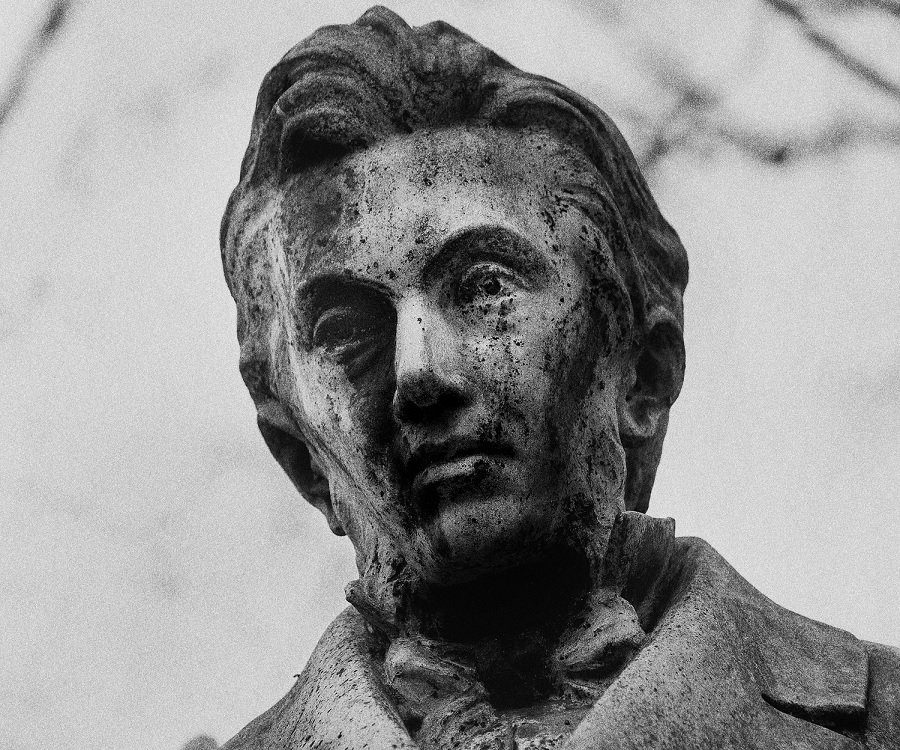
Søren Aabye Kierkegaard

Write with the senses

My dog (female) ​​Tulip, an autobiographical novel by J. R. Ackerley, is also an ethological study about the life of a particular Alsatian dog: the beloved and enigmatic Tulip. The story has as an almost exclusive motive the decipherment of the canine soul, sometimes with terrible anxieties when it comes to relating to the human environment, the dog is at the same time the reason for the writer to talk in a veiled way about his own problems to establish contact with the others.

But how to speak on behalf of someone who does not speak? In a novel you can’t bark, you can look for alternative ways to make the dog talk.

This is achieved by creating a style fundated in two values: fidelity and truthfulness. Faithfulness understood primarily as exclusivity. Ackerley has only one love and one story to tell, and he gives himself to both from the first page, in which he recalls a fortuitous and decisive event for the story he will share with Tulip. It is the meeting with the veterinarian-guide who will be the orientation for the unknown land of dogs and the author of the phrase that will end up becoming a leitmotif of the narration: “Tulip is a good girl. The problem is you». And so it will be: Tulip will lack for defects at a point that will shape a moral utopia. And that utopia will feed a sense of guilt in the person who, as a foreseeable consequence, will justify the sacrifice of everything that can distract him from his mission.Fidelity is, therefore, an essential feature of the dog-style, and will be inextricably linked to truthfulness, the other primary value in Ackerley’s writing.The narrator tries to tell «the truth» about of his dog, although He have to talk about pee and poop, of inappropriate behavior for the problems of life in society, of unpleasant smells.

The writer resorts to all his senses, but very special to smell. The nose does not lie to him and allows him to better understand his dog: to know what he wants or what he rejects, he needs to understand the scents of the world and its effects on dog action. He has to put the body to think and with that thought write, as if the whole word should pass, before reaching the paper, in some sense. To write like a dog is to make the body speak and accept whatever comes, however improper it may be. Because there is probably no idealization or aestheticization of the protagonist; the story is transparent like the look of a dog.

J.R. Ackerley and his dog Queenie

Anthropocentrism was always only of men

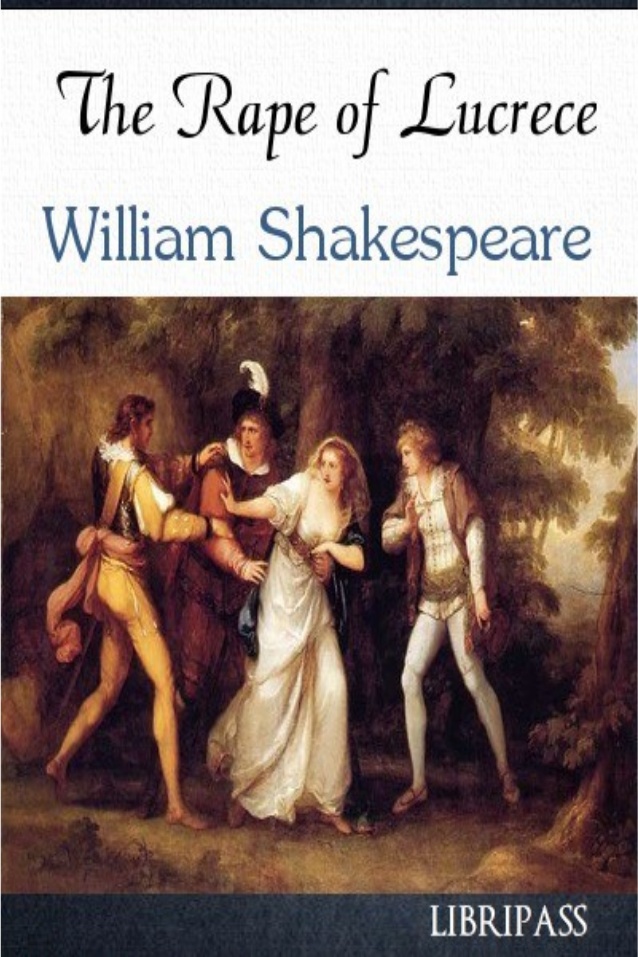
William Shakespeare is an undisputed exponent of the English Renaissance and his production collects and reworked the questions and contradictions that loom over the nature and function of men and women in society. Such is the case of the narrative poem The Rape of Lucrece. Shakespeare’s verses bring together the protagonist, her husband Collatine and the rapist Tarquin in a triangular constellation. In the drawing of these characters and their relationships, their generic construction is encrypted according to the social attributes and cultural expectations that fall on sex, in close relationship with the modes of appropriation of literary traditions and with the main socio-political processes.

Shakespeare modernizes his classic texts by moving them to Renaissance England to inquire into the mechanisms of construction of political and literary authority. Lucrece is an ideal object of admiration on the part of Collatine and an object of desire of Tarquin, who recognizes in she the materiality of her body, although dissociated from the will of the young woman. If Collatine manages to survive the pain of tragedy, it is a cause of an emerging political system (the government of consuls) that leads to his grieving. Tarquin, on the other hand, by means of the abolition of the political framework of which he is an exponent (the government of kings), suffers the condemnation for his criminal and thoughtless conduct, which early English Modernity begins to object to. In both cases, the symbolic order of the republic contemplates awards and punishments for men, but does not assign a specific space for victim woman, who can only think herself as a subject in the artistic level from the elaboration of pain for the crime perpetrated.

The Rape of Lucrece finds in the lyric the literary way to take part to her protagonist through the poetization of her pain, a process that stops and becomes a tragedy by not having the possibility of channeling it in the social sphere.

The poem presents in its first verses one of the defining problems of the topic of early modernity: the statute of desire. Within the framework of the anthropocentric and secular tendencies that characterize the English Renaissance, what is the nature of the erotic forces that claim their satisfaction and what role to assign them in social ties are questions that arise from The Rape of Lucrece.

The poem presents a Tarquin as a rapist in strictly social terms, so he does not cease to hold him responsible for the crime he perpetrated on Lucretia and, consequently, his subsequent tragedy.

In the composition of Tarquin, the Shakespearian poem gives the character of classical sources more literary and political complexity. Its desire dimension is the component that defines it as a modern subject, as in the link with desire is where the freedom of man is at stake: only from the recognition of himself as an autonomous entity, of the limits and scope of the faculties and own desires, is when the human being is admitted as a free individual. This recognition takes place from reflection and observation of the desire dimension to the burden of judgment. Tarquin disregards this mandate of Modernity.

The emerging government system helps Collatine go through its duel by assigning it a specific space to occupy and a role to play. He gathers his private lament for the sake of common welfare, a feature that defines the regime of consuls.

Objectified by a language that idealizes her, Lucrece can only obey the social mandates that are emitted in this discursive way.

Given its size, rape, then, constitutes a mandatory passage for the protagonist. This situation led Lucrece is subtracted from the place of object to which it has been reduced to try to participate of the elaboration of pain. The rhetorical display that follows outrage is the explanation of the element necessary to participate herself: language. Her extensive parliaments make up the search for words that can help to elaborate pain. In that composition, Lucrece must subject herself to the voice that shapes the duel and discovers the obsolescence and uselessness of the inherited traditions to do so.

Unlike the passage of her husband led to the government of consuls, she cannot elaborate her duel in the social order. The new social order does not recognize for women that rape is public, it force to her to grieve privately.

The Early Modernity of the English Renaissance, through the government of emerging consuls, is proposed as a social instance of men for men: the secular and anthropocentric process entails a gender brand. The woman does not find a place in the republic because she is not yet conceived as a subject of law: by not favoring the elaboration of the duel, the victim is victimized again. In the absence of a social space that absorbs pain, as achieved in the artistic sphere, suicide ensues.

Do not forget

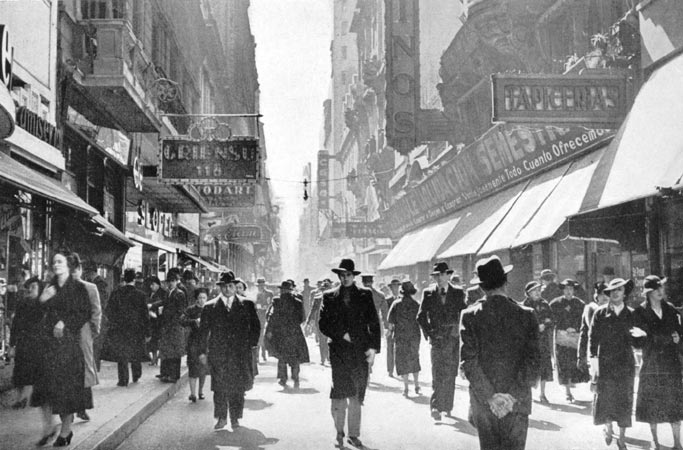
In the late nineteenth and early twentieth centuries, in Eastern Europe the Jews suffered «pogroms» and poverty. The Japanese Russian War, on the other hand and the First World War had aggravated the situation, since many times, when the father died, the whole family was left without daily support, which often affected young women and they seen on a trip the only way out to survive. Emigration to Buenos Aires appeared as a very attractive project for traffickers of women, because in that moment was a city with a large male population in addition to having a weak and corrupt legislation.

The traffickers usually sending a ruffian to a poor area of ​​Europe, who then selected the young girl and convince to family to live the «American dream». He married her through a mock marriage, without the corresponding civil union that could have protected to the victim. This false link together with the traditional obedience that the woman to man, reduce her miserable existence to slavery

Women were known as «Polish», a generic name applied to all Jewish prostitutes in Argentina, whether they come from Poland, Russia or Romania, and while some were sold to survive, most had been fooled, so which constituted an immigration without return since in addition to being humiliated by their activity, they suffered just like the rest of the Jewish community.

On the other hand, of all the immigrant groups in Argentina, it was the Jew who distinguished himself most in the fight against prostitution, on the one hand moved by a fear of the resurgence of xenophobic feelings and on the other by the rigid religious laws that they rejected the activity, to the point that the entire associated group to traffic and prostitution was segregated from the local Jewish community.

For these reasons, the Israelite Society for the Protection of Girls and Women or Ezras Noschim (Assistance to Women) was created, an institution created in London and chaired by the Baroness of Rothschild, especially to protect the arrival of Jewish women to american continent.

Old Buenos Aires
Diseña un sitio como este con WordPress.com
Comenzar