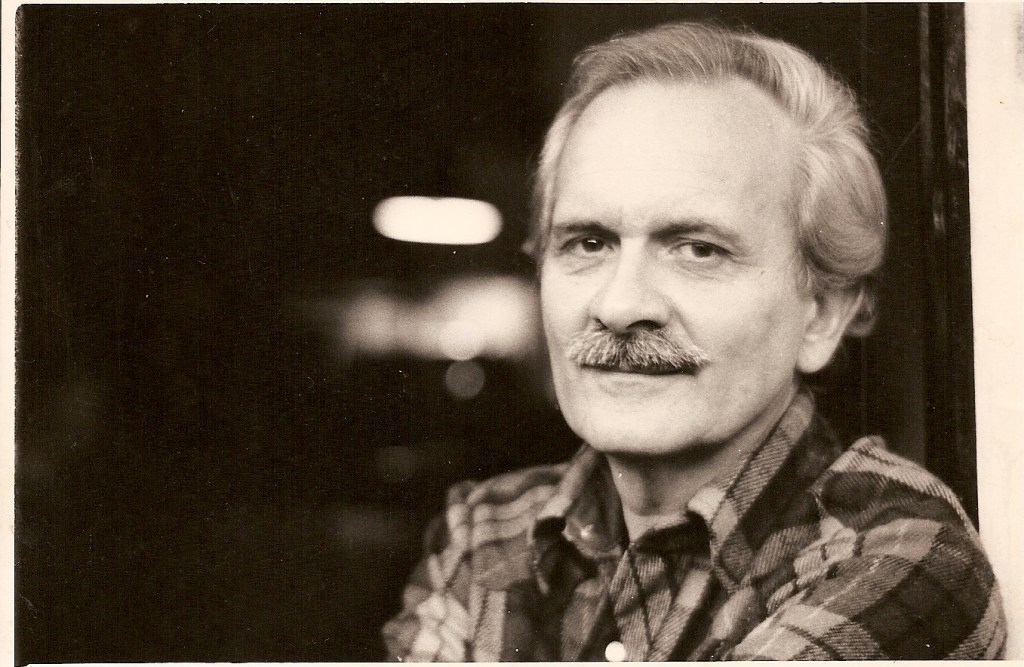
For the whims of humanity

José Saramago on a trip to Salzburg, Austria, went to a restaurant called «The Elephant» and, inside, stands before an important statue representing the journey of an elephant from Lisbon to Vienna. This encounter aroused a great curiosity that led him to know his story, but could not find too much information about it. Mainly, the data found is based on what happened with this elephant after arriving in Vienna after a long walk, and history tells us that the purpose of this travel was that the animal reaches where live its new owner moves, the Archduke Maximilian II of Austria, after being given away by the kings of Portugal. However, the limited information available on this story served Saramago as the basis for the fictional construction of this elephant’s journey through Europe in the 16th century. Small fragments of a historical episode that will allow the Portuguese writer to finish a fiction in which its protagonist is an Asian elephant called Solomon.

The story is focused mainly in the caravan that is organized according to the needs of the elephant, while traveling through Europe and at the same time that humans discuss and defend their ideas or rights over the custody of Solomon. In this wide range of personalities built by Saramago, some voices acquire greater strength when imposing their thinking.

Such is the case of the commander for whom at first the task entrusted by his King was humiliating. However, throughout the trip, he will end up being astonished and fond of the elephant. Another notorious voice is that of the animal’s caretaker who, although he claims not to know everything about the nature of the elephant, becomes a spokesman for his stomach and body to ensure compliance with his basic needs. In this way, there is also a constant questioning about who is the one who really drives the caravan: either is the commander with his inherent power over others, or they are the whims of the elephant with his routine, his breaks and his needs. With these particular elements, the story of Solomon’s trip makes it possible to construct cultural adjustments of displacement.

The mammal that embarks on an epic journey through Europe not only crosses the history of the time but also questions us as human beings. It is for this reason that the narrator evokes a crucial reflection through the protagonist: what saves us is the good character of the elephants, especially the natives of India. They think it is necessary to have a lot of patience to help human beings, even when we chase them and kill them to remove their ivory.

In The Journey of the Elephant, it is evidenced once again how literary fictions configure representations of the animal that come to «nullify» this apparent and discussed distinction between the human and the in-human. Hence, Saramago reaffirms a constant criticism towards this understanding that his novel interprets as a plausible «human nature», and with a much more direct reference to his reflection on humanity, he affirm that «the hard experience of life proved that not advisable to rely too much in human nature, in general”.
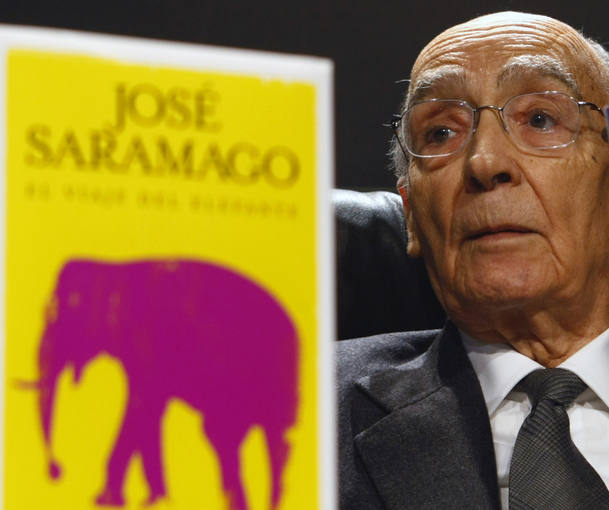
Portuguese Nobel Literature laureate Jose Saramago speaks during a news conference to present his latest novel «El viaje del Elefante» (Elephant travel) in Madrid December 16, 2008. REUTERS/Rocio Pelaez (SPAIN)

First ideas to teach reading

In a study that evaluates the knowledge that is part of the process of child literacy in children of different social classes and its impact on the learning of literacy, children from sectors at socio-environmental risk are detected differ from their peers in all dimensions linguistics considered (writing functionality, writing system and oral language). The differences found will be related to the level of literacy of the family and social environment. However, linguistic stimulation programs, elaborated and systematically implemented essays, such as those aimed at developing phonological awareness skills, can compensate for the phonological differences affected to children in socially vulnerable sectors, learning to read at the same time as their peers.

In another study (Dickinson & Tabors 2002) in children of low socio-economic level, were detected that literary activities developed at home, such as story reading and verbal interactions have immediate and lasting effects on the process of acquiring the reading. In the same sense, other research shows that frequent reading of stories by teachers and parents to children in charge significantly increases their level of vocabulary and basic reading skills stories such as the identification of written words (Porta & Difabio 2011; Roberts 2008).

Literature occupies an indisputable place in the formation of children in basic general education, which is why it must affect pedagogical fact that contributes to the fulfillment of the curriculum. With the development of workshops aimed at parents to promote the reading of stories at home and encourage from the pre-school stage the formation of an active and critical reader, a reader who, in more advanced stages of the school, able to understand and Interpret the read.

It is an essential condition enjoy the shared space between readers and listeners. Establishing a routine is another important requirement to create the habit of reading. Agreeing a moment of the day for reading, a space and the way in which reading will develop will awaken in the child the need to read everyday and that will identify this occasion as a space to share, enjoy and learn.

To keep the listener’s attention, it is essential to narrate the story in a dramatic way, ask questions, allow the child to ask them, ask him to guess the end of the story, talk about the drawings that appear in the text. When you read with interest, it presented with a model that also leads to think that the stories are interesting.

Repeating oral reading increases familiarity with each narrative core and helps establish deeper comments. By reading that way the child becomes familiar with the music that contains the story.

To clarify the meaning of unknown words or of meaning wrong, situations motivated in some cases by their infrequency in the daily use, refer to the following sequence. First, the meaning of the word is explained using an accessible language for the child, requesting that it be repeated in order to promote the phonological representation of the word. In this instance you can also evoke synonyms. Second, define the word in the context of the story. Third, the word is explained with examples whose contexts are different from the one described in the story. Fourth, the word is enunciated in the context of other sentences by way of example and the child is asked to make a judgment or opinion as to the correct or incorrect use of the word in the context of that sentence.

Make gestures and identify the illustrations that accompany the text while reading, it increase understanding without interrupting the flow of the narrative.

Naming, asking and enrich answers. Talk with the children about the personality and problems of the characters and about the way they solve the different situations. Establish connections between what happened in the history and circumstances of the child’s daily life. For example, in relationships with friends, habits, feelings, behaviors, observations, or while playing with toys, you can remember the story shared before. An interesting activity is to invent different endings for the same story.

Playing with the sounds of words helps children learn to read. From a cognitive perspective, reading is conceived as a skill that involves several perceptual, cognitive and linguistic processes and resources. However, the biggest weight factor is the set of phonological processing skills. Phonological awareness is an auditory ability that consists of intentionally listening, identifying and manipulating the sounds of spoken language.

Knowledge of the name of the letter is considered the second central predictor of the reading level and therefore is another important factor to have when developing literary activities at home. Adams, Foorman, Lundgerb and Beeler (2003) argue that phonological awareness training is essential to achieve effective reading and that, if the instruction is aimed at establishing connections between the word segments and the letters that represent those segments, The results are even better.

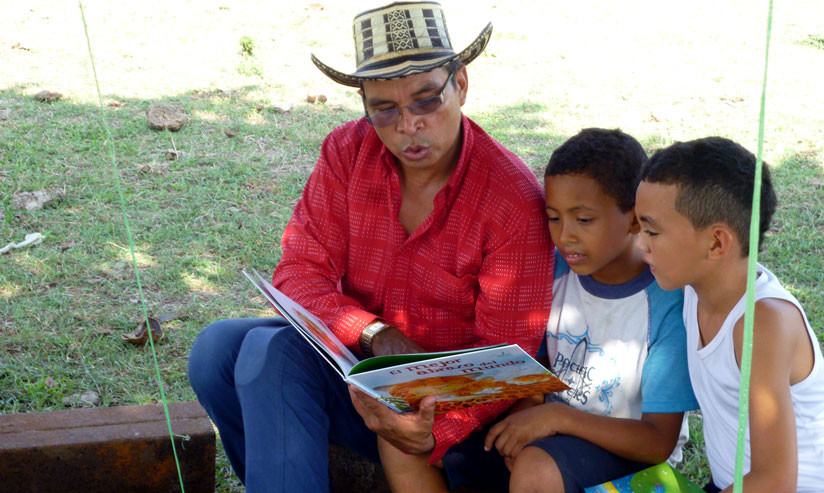
Luis Soriano (left) Colombian rural teacher

The trade of traveler

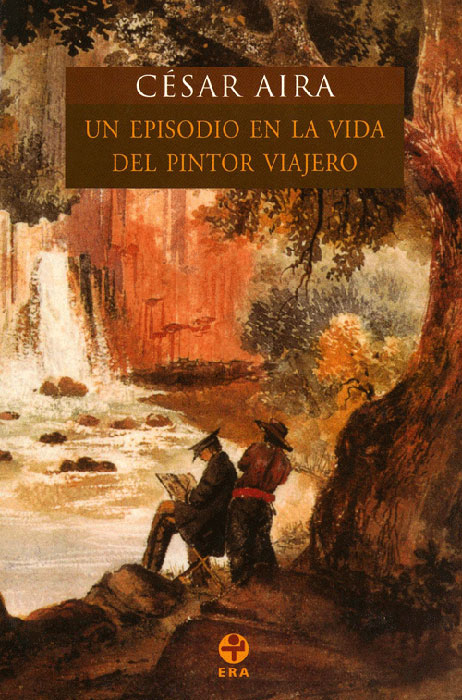
“And to begin again it was the most repeated task in the world. In fact, only there was the Repetition: in the beginning», say the narrator of Un Episodio en la Vida del Pintor Viajero (An episode in the life of the traveling painter) of César Aira.

The novel assumes the form of a biography supposedly based on the correspondence that Johan Moritz Rugendas himself, his protagonist, wrote the experience of his first visit to the Argentine pampas.

The novel not only has a historical character as the protagonist of the story but also incorporates a whole series of biographical references that are specific (at least that’s what his green biographers say). But, also, the narrator insists again and again in affirming the truthfulness of the narrative appealing even a probative material that would certify what happened: “This final part of the episode was even more inexplicable than the rest. But we cannot doubt its reality because they were documented in the artist’s later epistolary ”.

Ignoring the recommendations of his teacher Alexander von Humboldt, for whom the Pampas landscape did not contain anything really exceptional worthy of being portrayed, in 1837 Rugendas left Chile accompanied by another young German painter, Robert Krause, with a purpose in mind: «The goal of his long journey, which covered all his youth, was Argentina, the mysterious emptiness that was at the equidistant point of the horizons over the vast plains. Only there, he thought, could he find the reverse of his art». And, indeed, in the unlimited extension of the pampa, Rugendas will find «the reverse of his art.»

In the light of the glorious evening of January 20, they contemplated the set of silences and air. A collection of mule the size of ants was stamped on a cornice path, with movement of stars. A human and commercial intelligence guided them. Everything was human; the wildest nature was soaked with sociability, and the drawings they had made, insofar as they had had some value, were their documentation. The orographic infinity was the laboratory of shapes and colors. (Aira)

The detailed look proposed by the novel recovers the set of tools that tradition used not only for the preservation of stories but for «reinventing, with the spontaneous innocence of the action, what would have happened in the past.» Stolen symbolic forms now serve, from this new location, to capture a unique and fortuitous episode, stripped of all the fatities and political duties that once constricted literature. Fiction is now back on that journey through the pampas for the pleasure of adventure.

As the letters have been preserved, their biographers have had in them material to document, and although none tried, they could have perfectly rebuilt their traveling life day by day, almost hour by hour, without losing any movement of their spirit, none reaction, no scruple. Rugendas’s epistolary treasure reveals a life without secrets, and yet mysterious. (Aira)

The decline of anthropocentrism

The explorations of literary criticism, as well as the other disciplines dedicated to the analysis of various artistic practices, have been affected from some time with the weakening of anthropocentric perspectives.

They have been forming, thus, an increasingly broad and heterogeneous conceptual corpus. If at first the reference field with which we intended to identify this ideological crisis was limited to the tradition of animal literature, over time they became evident in ​​larger areas of artistic imagination.

Margot Norris, in his essays, links the intellectual trajectories of Charles Darwin, Friedrich Nietzsche and three contemporary European artists, Franz Kafka, Max Ernst and D. H. Lawrence. All of them rejection of the characteristics of the human that sustain its fullness regarding the state of scarcity of the animal, as well as the willingness to examine their own languages ​​in search of a reassessment of the ontological difference between man and animal. They are also related in skepticism regarding inherited philosophical responses and in reluctance to offer new solutions in the form of new oppositional limitations. On the contrary, these thinkers that Norris subscribe to the current of biocentrism understand that the human-animal relationship must be reconsidered from an discourse different to structuring binarisms that, for centuries, oppose body and mind, reason and instinct, presence and absence, memory and oblivion, calculation and spontaneity, creation and imitation.

The interest is focused on those thinkers and artists who create while imitating animals. In Norris’ discourse is taking shape an exercise in negativity, resistance to the methods and resources of art and humanistic criticism. Norris resorts to the Nietzschean metaphor of hammer philosophy: «an exercise at a time of power and aggression, and the destruction of culture idols by designating and demystifying them.»

The displacement of the point of view has also resulted in affirmative ways of considering the relationship between the human animal and the others living, the valuation of the body and its effusion of power. These features are noticeable in the field of visual arts, where experiences that materialize the material relationships between the physical body of the artist and that of animals proliferate, without symbolic attenuations or aestheticizations, denaturing the violence which subdue great masses of living beings in our societies. Biocentric art thus questions the reduction implied by the precision of the exclusively human aspects of culture, the conception of the cultural universe as the exclusive product of man, the only giver of meaning.

The fictions that most violently attempted against the ontological superiority of man are the same that exhibited the impossibility of conceiving a finished image of the animal. In Kafka’s stories, this effect is achieved through the creation of what Nietzsche has called intuitive metaphors.

If Kafka’s literature still actively participates in cultural debates around the status of the animal in our societies, it is because it has taken that step aside with an unprecedented radicality. An aesthetic, but also philosophical and political displacement that corrects the axis of the discussion about the discourse of the species from the metaphysical and performance narrative level. The crazy parliaments of animals de Kafka detailed that language, demarcated from subjective metaphysics, can effectively become animalized, and that this transformation affects our perception of the non-human living.

The «Authority» is above the laws

Eduardo Goligorsky’s story, «Hierarchical Order» (1975), begins with a persecution. Abáscal chases the Cholo, a killer minor, through the low funds of Buenos Aires. Persecutor and persecuted are at the service of the same organization. In contrast to the Cholo, Abáscal is a mercenary with ambitions of greatness and has orders to kill the Cholo. The organization has made a mistake and needs to erase its tracks. The Cholo is the weakest piece of the chain, it is not a professional, and it has received the task only because the professionals are currently outside the country, and, therefore, there is no other alternative. Abáscal follows him at dusk and witnesses his tours of cabarets and sordid streets. Finally, he manages to finish it with a shot with his Luger pistol in a miserable alley, and is lost in the shadows of the night; He has orders to disappear after committing the crime. The Doctor, a more important piece within the organization, has urged him to do so. Abáscal has an air ticket to go to Venezuela and he does so. Upon arrival, he is killed, when he is going down the ladder of the plane, by the anonymous firing of a Browning rifle. The Doctor finds out about his death without surprise, from his office in Buenos Aires. He knows it by a cable that came to his office, and that communicates, under the encrypted code of «We sign contract», the successful execution of Abáscal. He understand that this is how the hierarchical order works, that it is essential not to leave loose ends. It had been necessary to get rid of the Cholo; then, of his murderer. The Caracas subsidiary of the organization mandated that the crimes be simple and practical, with no waste of time or useless shocks. The Doctor knew that it was impossible not to leave any trace. In fact, he was aware of Abáscal’s execution. After these thoughts, the Doctor opens an envelope that his secretary has left on the desk, with a stamp that identifies him with the city of New York. In the moment what he open it to read the instructions that could mark the start of a new operation, he has cut the thread of a detonator: in a few seconds the explosive charge contained in the envelope explodes the room and leaves only a cluster of rubble.

Goligorsky’s story allows questioning about how power works, how it is built, and how it acts. In «Orden Jerarquico», power is remote and unpunished, and its impunity is grounded on the basis of anonymity and the complexity of its action devices. This story takes the subject of anonymity but instead of placing it on an individual applies it to an entire criminal organization.

Crime is the mirror of society, that is, society is seen from the crime. Everything is corrupted and that society is a jungle. There is no longer any mystery in causality: murders, robberies, scams, extortion, the chain is always economic. «Money that legislates morals and upholds the law is the only reason for these stories where everything is paid.»

The society represented in the story is overwhelmed by violence. The death of an individual is the beginning of a series that leads to another death or an unexpected consequence, but always marks a possible continuation and never an end point. Violence generates more violence. The corruption of society and the absence of justice, meanwhile, determine the impunity of criminal actions.

The organization that proposes the story has a mechanism of operational complex, and this complexity gives impunity in its action, thanks to the different members in many cases ignore the authority to which it responds. This implies reinsurance, since it eliminates the possibility of delation. The hierarchy works at the same time as a chain of command, guarantees effective action, since each of its members has a goal to fulfill, unknown to its subordinates. The title refers to this hierarchical order, and here the word «order» takes on a determining meaning: it refers not only to the strict organization of command levels, but also to the neatness and perfection in the execution of crimes. Everything turns out as planned, everything goes according to rigorous and planned procedures.

However, despite the narrator’s statement, in the story the machine fails and a repair is necessary. Goligorsky’s story, then, does not tell the usual and daily functioning of that organization, but its exception. The exception gives rise to the story, as it produces a conflict and the need for its reparation.

«Orden Jerarquico» creates in the reader the impression that there is something beyond words, a corrupt power that permeates the highest spheres of society. The text indicates that the true device of power is in an unnamed area. His ability to keep secret is also the reason for his strength and the guarantee of his impunity.

The meaning of the discourse

In 1969 Jacques Lacan, after the rector of the École Normale Supérieure removed to him the Dussane room, begins, on November 26, a seminar «The reverse of psychoanalysis» in the amphitheater of the Faculty of Law. This year seals the beginning of the formalization of what will be known as the «theory of the four discourses». In effect, the French psychoanalyst develops in this seminar the notion of discourse and elaborates a discursive typology. But, also, in this year, France is the protagonist of the birth of two works that resonate in the history of language sciences: The archeology of the knowing, by Michel Foucault, and «Analyze automatique du discours», by Michel Pêcheux. Three different perspectives question, at the same time, what could be thought of as the same object: the discourse bursts vigorously into the French intellectual scene.

Already since 1968, Jacques Lacan begins a reflection on the notion of discourse in his seminars. This does not mean that previously this term did not appear in the theoretical development of the French psychoanalyst; on the contrary, it appears in innumerable occasions, but with a broad sense, without a precise formalization.

It is in Seminary XVI (1968) in which the discourse begins to recover importance in the word of Lacan.

It is interesting to highlight the title of this seminar: «From one to the other». In this sense, the name of the seminar in which something about the discourse begins to explore marks a relationship. According to him it is the subject who receives of other the message in an inverted way. This relationship, from one Other to the other, in truth, anticipate the centrality that the idea of ​​a union acquired in the conformation of discourse.

For Lacan, discourse exceeds the word. In this way, the discourse cannot be homologated to the statement, to what was actually said, to the message.

The following year, in 1969, in his seminar entitled «The reverse of psychoanalysis», Lacan takes up the notion of discourse and develops it with greater precision. Here, Lacan defines this concept in various ways. A difference from the previous seminar, in these classes characterizes it as a «structure». However, he reiterates that the discourse exceeds the word, «can survive very well without words».

For there to be discourse, language is necessary first. It is through language that these stable relationships are installed that configure it. The idea of ​​an instrument does not imply the vision that the subject uses it freely. On the contrary, according to the psychoanalyst, “we are their employees. Language employs us, and for that reason it enjoys”.

The discourses present a particularity: they are not made of words and, therefore, appeal to transcend the content that is propagated in the communication.

The discourses embody a fundamental relationship from which a particular social bond is derived. Each discourse determine a different social bond; tie that does not really refer to the relationship between the subject and the other. This level of abstraction proposed by Lacan is of the formal order as far as his concern is centered on the links between the elements that make up the discourses and not on the content.

Discourse is an object to build (Courtine, 1981). According to Orlandi (1987), while the text is a unit of analysis, it is a unit of significance in relation to a situation, discourse is a theoretical and methodological concept, so its limits cannot be established precisely. Returning to the Lacanian thought, it is a device that exceeds the materiality of the sentences it groups.

This object to build, the discourse, takes shape through the sense. It is in this way, the meaning, whose matrix is ​​born in the articulation with their formation and with the Other. This link, a discourse with meaning, does not escape, in Lacanian terms, to the imaginary record. Indeed, in Seminary XXII (1974-1975), the psychoanalyst locates the sense between the imaginary and the symbolic: the meaning is with which the imaginary responds to the symbolic. Record that the imaginary has the function of providing consistency, giving the illusion of complete autonomy. Hence the process of discursive construction is inscribed within an imaginary that restricts not only the content of the statements but also the modalities that these statements adopt.

This relationship between the imaginary and the discourse is visible in the elaboration of certain discursive typologies. The meaning that crystallizes in the typologies that classify discourses according to the fields of the knowing (medical discourse, literary discourse, scientific discourse, etc.), or according to the institutions (political discourse, religious discourse, legal discourse, etc.), or according to the sectors of social activity (administrative discourse, for example), it stabilizes the dynamic discursive movement and gives it an illusion of homogeneity. These typologies are, in truth, abstract constructions, which start from distinctions conceived a priori and, therefore, do not know the place of the constitutive failure of the discourses. They are presented as already given, as autonomous, external and previous categories to the statement.

Lacanian teaching has allowed to revalue the category of speaker, intentional and voluntary, on which the notion of subject has shifted, to which it has been extended to his words.

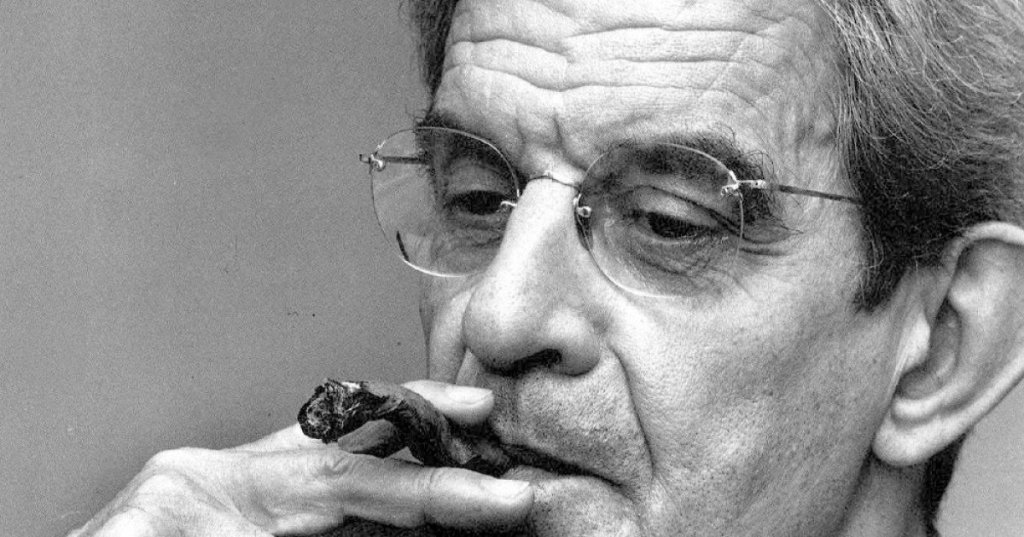
Jacques Lacan

The journalistic ability to show reality

«The chronicle is the form of real story where prose weighs more: where writing weighs more.» Martín Caparrós (Argentinian writer)

«Haiti. La Isla de la Fantasia (Haiti. The island of fantasy)» and «Lima. Perfume del Fin (Lima. Perfume of the end)», published in 1991 and 1992 respectively, are two of the chronicles written by Caparros in which the Latin American city is presented as a postmodern pandemonium.

The chronicles of Caparrós on the two Latin American capitals are framed in a desire to account for two moments of crisis that attracted these societies, but avoiding the focus on major events and the chronological and casual account of the coverage of international events; Thus, the narrative is always under the weight of a writing that presents the facts from multiple perspectives in fragmentary and non-linear sequences. The texts are composed of independent narrative blocks with an autonomous structure (beginning, conflict, closing), which include multiplicity of scenes, characters, voices and descriptions, and which are linked by a transversal axis that gives the unit the reading path , the political context of those countries.

In Haiti, Jean Aristide, «a priest of the poor, persecuted, without means» has been elected president; The forces of the dictator Duvalier (son) tried a coup before assuming, but the people went out and stopped him. The threat, however, remains.

In Peru, the terrorist group that controls a third of the country, Sendero Luminoso (Bright Path), advances silently over the capital in the framework of a war that few recognize as such and that, it is said, is about to initiate «the final offensive» against the capital.

Caparrós travels when the tension is felt in the cities of Pourt-au-Prince and Lima. Their stories, however, do not explicitly state this purpose, but rather present an attentive investigation of those societies for the reader to understand the whys of those historical moments. To do so, he doubts the official stories and investigates personally from observation and interview, instruments that allow him to put each one of the persons, spaces and practices that embody of these spaces in the foreground.

… in the streets of Pourt-au-Prince, there is a sustained cacophony of shouting, music, speakers and an impossible heat. In those streets, which were once paved and now are black and smelly mud, there are men who wash their heads with the sewage that crosses them… women who spend their entire days on their knees before ten guavas or a bunch of peanuts. There are men who carry large timbers like four men on their shoulders, men who watch what more men do, men who look at those men who look, men who do not even care, women who carry on their heads water buckets or ruthless bales , in impossible balance, and many boys who run splashing from mud to trash. In that corner a gray and big pig like thunder eats garbage on a mountain of garbage and a pale ram on the tip of a rope waits for someone to buy it to take it to the sacrifice (Caparros).

Pourt-au-Prince is a city devastated by the force of nature and men, that’s why everything is similar and the narrator cannot reconstruct a path through it, but only enumerate observations; in those streets there is no center or clear destination to reach.

Caparrós chooses to eliminate from his chronicle the churches and mansions that are part of the entire colonial city and records the extreme points of the urban countenance: on the one hand, the endless succession «of wooden houses or cartons of painted colors, (where) families they are piled up in six square meters without light or water or high hopes ”; on the other, the «immense, white, neoclassical» government palace; points of urban geography that begin to suggest the structural problem of Haiti and its social antagonism.

The same thing he wrote in the description of Lima, in that the profuse improvised settlements of the periphery contrast with the neighborhoods of the rich, «made of wide, tree-lined streets, large French-style houses or false Californian or false colonial».

The public space is fragmented and its urban topography expresses the struggles of various groups; This is how it becomes the scene of political discontent: in Lima, “many miners with helmets and cholas with babies” take the street to the shout of slogans for salary increases, preservation of work and reduction of prices of goods: “Almost Every day there is a demonstration, they tell me, but this is one of the big ones». In Haiti, «groups of women wearing hats and bible in the armpit, men with shirts and Aristide» gather to protest the bad life and ask for the resignation of the minister of commerce.

Caparros’ stories do not tell the specific fact, but rather rebuild a society and establish a state of affairs without resorting to the mimetic paradigm of realism. There is no complete social to represent, but a reconstruction of the social from the fragmentary. Thus, the superposition of observations, descriptions, testimonies, versions, anecdotes and statistical data, builds a dense image in the individual, group and collective flat quality account for the social heterogeneity and complexity of those moments. The scenario on which these lives lie, more than those events, are the cities, spaces where marginalization and violence are habitual practices and that, depending on this, are resignified, transformed and remapped in new territories.

The General Hospital is a set of old green-painted buildings where inmates are piled up in a multitude of beds and a multitude of screams. It is like an old war image of Crimea, Russia, 1855. The heat is suffocating, and the smells; in the halls, sick people on the floor expect someone to take over. A girl cries screaming saying «I want to go.» (Martin Caparros)

Martin Caparros (central location)

The difficulty of expressing the disease

In Anthropology of Pain, David Le Breton defines the sensation of pain, in the first place, as an intimate and personal fact that escapes to any extent, to any attempt to isolate or describe it, to any desire to inform another about its intensity and its nature. For the French anthropologist pain is «a failure of language»: Encased in the darkness of the flesh, it is reserved for the intimate deliberation of the individual. It absorbs it in its halo or devours it like a beast crouched inside, but leaving it impotent to talk about that tormenting intimacy. Faced with its threat, the breaking of the unity of existence causes the fragmentation of language. It arouses the shout, the complaint, the moan, the crying or the silence, that is to say, failures in the word and the thought, it breaks the voice and it becomes unknown.

There is no doubt that man is never as alone as when he is in pain. By naming it, language cheats the world and reveals itself in crisis in the face of events that invade the body.

«What is more personal than the death itself that feels to arrive and that moves the human being from the space of life towards that of death?» (Kottow, 2009).

Susan Sontag had exposed on her renowned essay The Disease and its metaphors: Disease is the night side of life, a more expensive citizenship. To all, at birth, we grant ourselves double citizenship, the realm of the healthy and the realm of the sick. And although we prefer to use the good passport, sooner or later each of us is forced to identify himself, at least for a while, as a citizen of that other place (2005).

Le Breton understands that, in order to be bearable, the processes lived by the subject in his flesh must have in the feeling that he elaborates, a form and a meaning: when these are undone by the irruption of the unusual, of the suffering, of the intolerable, we have to open a path for them.

While it is true that expressions such as «own body» or «life itself» are used in everyday language, disease seems to play a complex and uncertain role in the universe of «self» and «property.» The disease even refers to the figures of otherness, of the host and even of the invader. As Susan Sontag points out, the disease is metaphorically «the barbarian within the body.» And he continues: As soon as cancer is talked about, the master metaphors do not come from the economy but from the vocabulary of war: there is no doctor, nor attentive patient, who is not well versed in this military terminology. Cancer cells do not multiply: «invade.» From the original tumor, the cancer cells «colonize» remote areas of the body, starting by implanting advanced tiny ones. The body’s «defenses» are almost never vigorous enough to eliminate a tumor that has created its own blood supply and is made up of miles of millions of destructive cells. Also the treatment tastes like army.

The common places of the disease such as invasion, threat or contamination do nothing more than to support the imaginary «immune» we have on health. Imaginary that is based on the idea of ​​a clear distinction between our «own body» identified with health and those parasitic and foreign creatures that occupy a space that does not belong to them, to which they can even be potentially destroyed. The sick body is the subject of a body taken.

In his essay «Literatura+Enfermedad=Enfermedad (Literature + disease = disease)», Roberto Bolaño starts from the account of a visit to the hospital in Barcelona, ​​in which he was treated for a long time for a liver disease than he suffers and which would lead him to the death later. After receiving the bad news from the doctor, the essay begins with a journey that will allow «reflect on literature, death and desire». «Fucking is the only thing that those who are going to die want» he says. Yes disease and death are linked to defeat, the only options are sex and reading.

«All life is a demolition process,» Scott Fitzgerald noted in his diary. Similarly, Bolaño seems to maintain in his texts the idea that the disease is not a mere external accident but, rather, the disease is coextensive of life. It would not be about escaping the disease, but rather preferring it, of turning it into a fixed idea capable of dragging us in some new direction.

It is really healthier not to travel, it is healthier not to move, never leave home, be warm in winter and just take off the scarf in summer, it is healthier not to open your mouth or blink, it is healthier not to breathe. But the truth is that one breathes and travels. I, without going any further, began to travel from a very young age, from the age of seven or eight, approximately. From that moment on the trips were constant. Result: multiple diseases. (Bolaño)

The disease is a type of exile, a type of journey. The patient enters a world with its spaces and its special rules; it is not forced to confinement but it is produced anyway. Unlike the great collective epidemics of the past, many current illnesses isolate the individual from the community. As Susan Sontag points out, for the ancients the disease was an instrument of divine wrath that prosecuted the community or an individual while the diseases on which modern myths are concentrated are presented as a form of self-judgment, of self-betrayal.

The intimate relationship with pain does not confront a culture and an injury, but it is a particular painful situation to a subject whose history is unique even if the knowledge of their class origin, their cultural identity and religious confession give precise information about from the style of what he experiences and his reactions.

King Arthur. Knowing the origin of known stories

Mabinogion is a traditional term with which a collection of one-time stories written in Middle Welsh is known, that is, in Welsh that was written in Wales between 1100 and 1350. But the compilation itself is not medieval because it was written by the First translator of the English texts, Lady Charlotte Guest, in the mid-19th century. It includes texts of very diverse subjects: Pedeir Keinc and Mabinogi (Four Branches of Mabinogi), for example, are stories that combine elements from ancient mythical and legendary stories with international motifs and themes of deep significance for the Welsh society of that time, such as the friendship between men and the desirable moral code to maintain social order and prevent blood feuds. Strictly speaking, the term mabinogi corresponds to these four compositions; each story ends as follows: «A llynaual y teruyna y geinghonno’r Mabinyogi ”(And thus ends this branch of the Mabinogi). The group also includes two legendary and pseudohistorical stories, Cyfranc Lludd a Llefelys (The encounter between Lludd and Llefelys), on the three plagues that struck the British Isles and the battle between two dragons, and Breudwyt Macsen (Macsen’s Dream), which recounts how Emperor Magnus Maximus, the British usurper, found the woman he had fallen in love with in dreams.

Mabinogion body is completed with the Arthurian tales, including the oldest story about King Arthur, Culhwchac Olwen, Chwedyl Iarlles y Ffynnawn (The story of the Countess of the Well), Ystoria Gereintvab Erbin (The story of Gereint son of Erbin) and Ystoria Beredur (The story of Peredur), and a presumably slightly later text, Breudwyt Ronabwy (The Dream of Rhonabwy), a satire about Arturo and his knights that can also be read as a parody of the chivalrous genre. In his dream, Rhonabwy is transported towards the age of King Arthur, who plays gwyddbwyll, a board game similar to chess, with Owein.

All these stories include style, narrative conventions that are known in Welsh as the style of cyfarwydd («storyteller»), a series of formal devices that refer to the chronological order in the evolution of stories. and the relationship between episodes, the repetition of formulas, stereotyped structures to describe characters, armor, horses, scenes of battles or banquets, among other formalities.

The power of the city over the individual and its influence on novels

Preterito Perfecto (Preterite perfect), the novel by writer Hugo Foguet, states that «The city is the sacred space where the fate of the characters is fulfilled». The author explains in an interview: «As for the city as a recurring factor, the habitat of modern man is the city, and the counterpoint between present and past, which appears in Latin American literature, perhaps because we, Latin Americans have not resolved our past (1983). The observations on the writer’s first stories are related to this constant we identify; these stories are supported in three moments: «the city»; “The man of the city” and “The possibilities that await the man and the city he has created”.

In Foguet’s narrative, the momentum of progress and technology, increasingly accelerated, involves humanity’s own ruin. The metropolis of the future are disciplined under a hidden control and lack art. We present two stories as prototypes of the later city: «La Ciudad Subterranea (The underground city)» and «La Ventana que Mira Hacia el Futuro (The-window-that-looks-to-the future)».

The first story warns us, from its first lines, about the nuclear disaster: «the last atomic explosions of 1983» (Foguet 1963). The terrestrial surface has become a non habitable space: “The meadows were badlands, and in the best case, savannas of hard and sharp grasses; and the forests and jungles had become impenetrable, gloomy, curiously foul”. Once the modern apocalypse has occurred, humanity must organize again to guarantee its survival: «The new cities were excavated under the old ones or next to them» and were called «Habitat».

The new space where this post-atomic society unfolds requires a different nomenclature to be able to refer to the new way of life of its underground inhabitants. The relationship between (some) words and things has also been transformed. The story, in a science fiction key, focuses not only on the environmental effects that have ocurred after the total destruction, but also pays attention to other socio-political effects. Technology and science are problematized according to the supremacy of instrumental reason over the condition of man.

The mole-metropolis is a totalitarian society governed by «an electronic brain», «supreme judge» of the habitat that controls all individuals. The new system requires the exercise of punishment to counteract any evidence of resistance: the character of Mario Claudio is accused of carrying out a heresy of language due to an abusive practice of archaisms that does not correspond to the «city style.» threat takes shape in «simple words like rain, spring, thirst» forbidden to the inhabitants. The sobering measure will be the expulsion of Mario Claudio «through the sixth mouth.» Once on the earth’s surface, the protagonist can see next to «the ruins of Buenos Aires «to a woman whom he calls Alma ; the Adamic gesture of giving her a name will be the last act of her human condition.

The second story, «The-window-that-looks-to-the future», builds a city. There, his Excellency inaugurated La Ventana-Que-Mira-Al-Futuro. The public work offers, by means of a payment, to those who wish to «look into the future without doubts or fears». The protagonists of the story, Aberasturi and Shapiro decide to experience the scope of the “Future Project” artifact and see the programmed city that “emerged splendid and cold, lonely and dead, clean and heated like an operating room» tailored to not want anything, not to think about anything, not to suffer anything». After an interval, the characters visualize the city that contains «The Great Computer» that digits life. Everything is regulated and planned.

Other stories expose various modes of expulsion and destruction of urban space. «La Plaga (The plague)» narrates the emergence of a mysterious plague that wreaks havoc on the urban population, finally, this causes the closure of the city. Sanitary isolation will be transformed into a method of civil indoctrination; The city has become a panoptic. In «Otro vendra en su nombre (Another will come in his name)» (Foguet 1965), On the other hand, the city fears the imminent invasion of an unknown enemy and prepares to resist in the name of a «lighted patriotism»; finally, it will produce the exodus of its inhabitants: «Against the back of the crowd was the city».

For its part, «Radioactividad (Radioactivity)», «Advenimiento de la Bomba (Advent of the Bomb)» and «Bienvenido Falsenburg! (Welcome Felsenburg!)», reveal the experience of the futuristic city from the nuclear threat; dysphoric versions of the world to come.

On the other hand, the author built in Preterito Perfecto (1983) two images circumscribed to the space of San Miguel de Tucumán (Argentina): the first, in a dreamlike key, projects a time of apocalypse, and second, a desolate urban space.

It is a dark, uncertain and violent social time. The city has become a guarded and repressive space. Everything can collapse. The present now, the one the protagonist dreams of, is a time where there is no paradise, no age of innocence to recover, no further destiny, no goal. ” The future has dried up.

The city spaces are «seen» and valued from different temporal coordinates. Thus, the cities of the past are pierced by the traces of absences and changes. Those of the present are looking to give them a name and with it, their identity. Finally, those of the future are built from the disenchanted look of the walker. If the city is «the navel of the world» it is also the center of experience and writing of the great part of the novelists’ work.

Hugo Foguet
Diseña un sitio como este con WordPress.com
Comenzar