The simulation of living

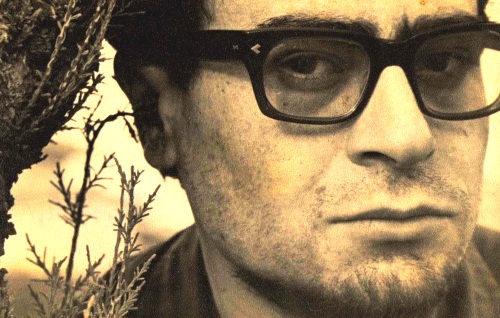
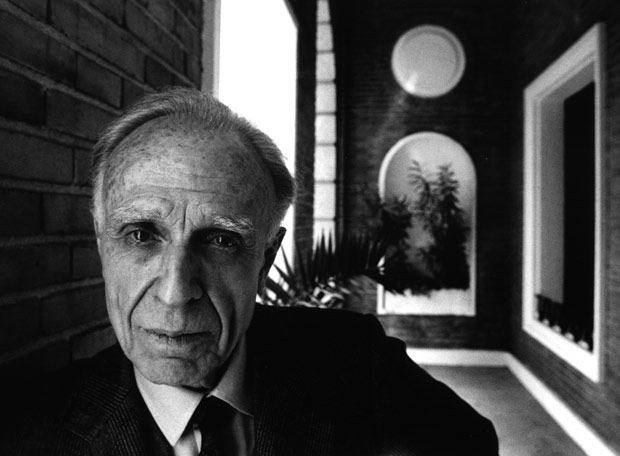
The ideology of consumption, the mediatization of everyday life and the advertising culture of “beauty and happiness” of the youth are the starting point of La Prueba (The Test) of César Aira. This short novel, published in 1992, is about Marcia, a virgin, shy and depressed teenager, who one day is questioned in the street by two punk girls who claim to be called Mao and Lenin and who pretend to be lesbians: “Would you like to fuck? «, they say. A little reluctantly, but full of curiosity, Marcia accompanies these girls to a fast food place. The punks try to seduce her and Marcia tries to understand those young people so different from them, going to what she knows: consumption of television programs and rock. The story take an unexpected turn when Mao and Lenin decide to give Marcia a definitive proof of her love. They go to a supermarket and, on behalf of the «Love Command» they steal the boxes, burn the establishment and they kill employees and consumers with hyperreal violence.

The extreme violence of punk girls is nothing more than the violence of consumption and the modernization of the nineties in Argentina. Indeed, punks attack consumers in a supermarket, a space par excellence of the consumer society. Likewise, the destruction is related to the “revolution of the spectacle and the image” that also took place in those years, in the context of deregulation of the media. However, if Marcia is the privileged recipient of the final scenes of La Prueba, it is because she represents the «official» show.

At the beginning of La Prueba we met Marcia doing her usual walk from school to her home. What she finds every time she repeats the walk is the periodic meeting of young people after school. From a position of relative exteriority, Marcia “collided with the load of floating signs … She didn’t have it, or she shouldn’t feel it, because it was part of the system, but all those youngs were wasting their time. It was the system they had to be happy. That was allowed, and Marcia captured it perfectly, although he could not participate.

Although Marcia cannot participate directly in the consumption she does experience and validate the plus of enjoyment of the beauty and happiness system consumption: from a relative distance she observes and classifies with the categories of a sociology of youth very close to the studies of market. As if there were products in a supermarket, Marcia sees «young people exhibiting» as «emblems of beauty or happiness». Marcia’s qualifying impulse returns again and again during his conversation with the punks. When Mao tells Marcia that she and Lenin are not punks, full of bewilderment Marcia thinks: «They are feminists» … Repeatedly, Marcia tries to categorize Mao and Lenin in terms of consumption.

According to César Barros, in La Prueba, Marcia moves from the world of opinions, countenance and ideological determinations to the world of creative and subjective action proposed by the active nihilism of Mao and Lenin.

Finding the dimension of the act, Marcia recorded the path of appropriation of the commodified desire of the show.

At one point the narrator reflects theoretically: There is an old proverb that says: «If God does not exist, everything is allowed.» But the truth is that everything is never allowed, because there are laws of likelihood that survive the Creator. Even so, the second part of the proverb can work, that is, come true, in the hypothetical way, giving rise to a second proverb about the original model: «If everything is allowed …». This new proverb has no second part. Indeed, if everything is allowed … what?… If everything is allowed … everything is transformed”.

The proliferation of media languages ​​in texts is an example of simulation practices. In the repetition, the family image is transformed into something else: the «love at first sight» and «the test of love» clichés in La Prueba turned the fictional melodrama into a class B movie filmed to the rhythm of the video clip. This practice of violence and simulation means updating the potential of the virtual image in the act.

In Aira’s narratives, the act of simulation appears as subversive regarding the truths and identities of the legitimate order. If a notion of politics can be thought of in the texts of Aira, this does not lie in the representation of an antagonistic or marginal subject with respect to the system. Rather, in the very act of repetition and simulation, the characters propose the possibility of thinking a new relationship with their own desire, one that, like subjectivity, never stabilizes but is always in excess.

The link between the virtual potential of the characters to reinvent themselves freely and the virtual power of a collective is very weak in César Aira’s narrative. However, the end of La Prueba will expose the aesthetic and political problem of the relationship with what remains unthinkable and did not show but that the figures of the postmodern spectacle repeat. By assuming the repetitions of the drill, punk girls dramatize a relationship with those other worlds and ways of life that have not yet been updated. From the repetition in the present the past is updated and the dimension of a future becomes possible.

Cesar Aira

The feeling of the migrant

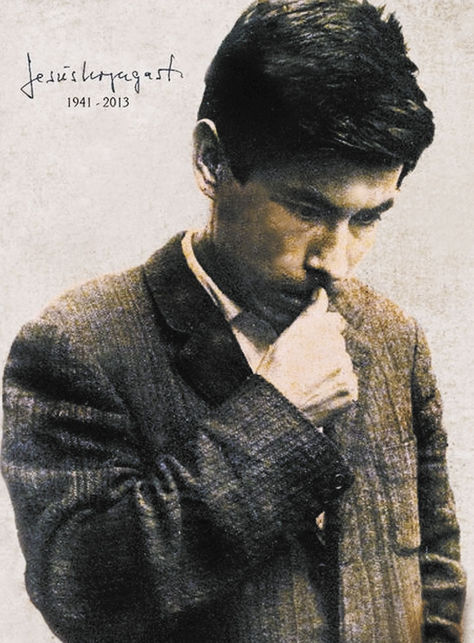
Jesús Urzagasti was born in 1941 in a small town located south of the Bolivian Grand Chaco. His life was marked by a series of displacements that had as goal to access to education. He lived in Yacuiba, Tarija, Salta until arriving, during the sixties, to the city of La Paz. At the headquarters of the government he entered the university and studied, for a year, the geology career he abandoned to devote to literature and journalism. Author of seven novels and four poems is today, one of the most recognized Bolivian writers.

The departure of his native place generates the loss of orientation of the writer who begins to create infinite paths that allow him to recover his reference point, his center of the world left in the native Chaco. All the novels of the author can read from this perspective in which language becomes a bridge, on the way to unite those worlds. Space becomes very important.

«En el Pais del Silencio» (In the Country of Silence) is a novel «without a roof», there are no houses, no walls, no doors, or anything that contains the subject of the enunciation, only a small room appears in the story accessible by The Other after Many years of walking the city in search of a job. This space is specified as a «small room that has the windows closed … there are a bed, a few books, five wooden logs and some utensils…». In this brief description of the objects that make up the dwelling, three universes open up: that of memory, that of words and that of the rural past. The bed, books, wooden logs and utensils function as bridges between the present and the past, between a here and there.

The «feeling migrant» materializes in relation to these spaces of intimacy from the feeling of alienation that dominates the character. The city becomes elusive, distant, expulsive leaves the subject «trapped in a city that will always be strange to me». In this sense, the windows function as metaphors of closed worlds and realize the impossibility of approach between these two universes: outside is the alien, inside the own.

As for the street, it becomes, at the end of the text, the space conducive to «living». The city is presented from the beginning of the work as an unpopulated place due to the situation that the country and the streets are going through (military dictatorship) , the transit area of ​​the inhabitants of the city, became impassable and highlights the absence of subjects that transform the city into a cemetery. The character moves through these streets turned into fantasy and dominated by the «feeling migrant.»

Jesus Urzagasti

The city (Ciudad) farce

Written in 1966, La Ciudad (The City) is the first novel of the Involuntary Trilogy of the Uruguayan writer Mario Levrero. The print edition in book format appears in 1970.

In La Ciudad, from the beginning, we enter that disturbing situation, where there are no clear marks of spatial or temporal references but we find a character – he also without a name and without any reference – that in the first person tells us its arrival at an uninhabited house.

We understand that the construction of a space – physical and imaginary – involves complex ideological, writing and rewriting operations of margins and borders. The dispute between cartographies and paths and the need to break with personal alienation is the axis on which the protagonist’s trip is made, the time that one of the pillars of modernity is dismantled: the city as the organizer of the imaginary.

«The house apparently had not been inhabited or opened its doors and windows for many years.» The house image is used on different occasions by Levrero to build the spatial sensation of ruin and collapse. The house is a humid and dark place where things are ordered to the taste of another so the protagonist experiences a permanent climate of discomfort. «The interior was in order although adequate to the taste and needs of the previous inhabitants: equivalent, for me, a disorder.»

The dispute between order and disorder is one of the axes of the Involuntary Trilogy. Faced with the arbitrariness of the imposition, we witness the constant struggle of the protagonist to resist different changes ordered by others. Alienation is understood as the ownership of an order imposed on the individual by unknown forces. In response, the text gives us two alternatives: on the one hand, we are shown the path taken by the protagonist in search of that own territoriality and, on the other, the same novel from its composition aims to establish itself as a poetic of the disorder that is it will be increasing throughout the Trilogy until arriving in Paris -another one of the works of the triology- to build as a fictionalization of the author’s discretion, ignoring almost all the sequential narrative logic. Writing becomes the only possible place of residence, but Levrero also doubts this exit -the ability to represent language- and is content to have a space to deposit waste and pile them up.

The search for the narrator character is based on material and basic needs such as hunger, cold or sexual appetite. This materialistic tendency is present throughout the Trilogy. In the case of the beginning of La Ciudad, the protagonist, then dismisses the idea of ​​leaving the house while it raining to find kerosene to try to make a fire and drink something hot, finally decide to go driven by hunger.

In Levrero, desire as a transcendent manifestation of being is always cornered by regulations or rules of behavior that different institutions (the Company in La Ciudad or the Organization in Paris) impose on the individual. Sexual frustration is then one of the outstanding characteristics.

The routine, symbolized in the tranquility of a peaceful house to share with a woman, is one of the pitfalls that the protagonist must face repeatedly in the course of their inner search. Family routine means the domestication of the love relationship and the closing of eroticism as a transcendent experience.

In this introspective journey, the reader is also challenged by the narrative. It is a double route, that of the protagonist and that of the reader, in search of a territoriality that is based on writing.

In the spatiality of the town there is a service station, a bar, a shoe store and a warehouse. With the arrival at that place, a scenario that seems to conspire against the protagonist is finished.

Fear is conceived in its materiality as an object susceptible to touch, «I felt it as a large object that bumps into the darkness of a closed room,» he tells us anticipating the scene of The Place. That palpable fear is generated from the relocation of the protagonist, a foreigner’s own alienity that cannot make sense in a place where he does not know the codes of sociability. He can’t understand, he feels more and more a stranger, an other. A clear example of this otherness is the unexpected behavior for the protagonist – and the reader – of the shoemaker’s employee: «I approached a little more, and then I could realize that I was not really looking for any kind of shoes, but playing , with some small players, made of plastic, of different colors, similar to trucks, buses and trains».

The characters of La Ciudad – except the protagonist – lack dramatic thickness, they are like actors who play a role – the regulation. Everything seems to the main character a great theatricalization, a farce / trap mounted, even a mockery.

The Company is only a promise of well-being and progress, a great farce whose unknown determination seems to be that: plunging individuals into that lie. The price to be paid is the loss of personal wishes in order to respect the regulation.

La Ciudad is the writing of an attempt to register its own spatiality on cartographies and traced by others. In this tension the territoriality dispute is conceived. The house ordered by others from the beginning works as a model that replicates and synthesizes the alienation of the individual against urban spatiality. The sinister is the border that separates the inner self from the regulated space. The threat stands on the manifestation of subjectivity.

The novel does not end with the personal realization of the protagonist after a journey in which he reaches inner liberation. The novel has a end circular because when it reaches the railway station it meets another foreign, bureaucratic «place», also governed by a regulation or is it the same?.

The circular structure of the novel represents the failure of the hero. The leitmotif of the trip does not imply an accomplishment of the protagonist. His career is marked by the verification of the alienation of the city and the constant overcoming of the many traps that the city has to tame his desire. However, it never reaches its territoriality, the regulation seems to apply everywhere and the search becomes permanent, it becomes another waiting.

Still, the end is not entirely pessimistic. The circularity is not closed. The tour has not been completely sterile. The protagonist, stripped from the beginning of the novel of any identity or reference brand, break in the end with that fault. When confronted with the station manager, he manages to articulate a name —Montevideo— as a destination. It is the only place named in the novel. The capacity of representation and communication of language is questioned, but it remains a fissure where it is possible to think about the manifestation of the experience of the self. Language as a fissure where it is possible to think of the person beyond the institutionalized order. Language as a fissure for the manifestation of desire. In La Ciudad the tension between regulated space and own territoriality is not resolved but the journey continues, it is still written.

Mario Levrero

The loneliness of the dying

«The loneliness of the dying» of Norbert Elías, the only child of a Jewish marriage who fails to escape the machines of Nazi Germany. Elías abandons an ascending career of sociologist to devote himself to professional boxing. Then he will try other solutions. He will train as a therapist, study medicine and philosophy and after ten years of silence in which thought becomes stealthy hunting exercise, he will write a huge work.

How do we face the implicit violence of having to die? With this question the trip or the derivative of «The loneliness of the dying» opens. In this essay, Elías offers us sixteen scenes where we can glimpse different cultural ways of experiencing death that go beyond the twentieth century. All parts of an initial premise: «what creates problems for man is not death but knowing about death» because for the author death it becomes a sociological problem to the extent that we become aware that its importance does not have so much to do with the physical process that the bodies go through but with a socially constructed fear:

Death is a problem of the living. The dead have no problems. Among the many creatures on Earth that die, it is only a problem for men to die. They share birth, youth, sexual maturity, illness, old age and death with the other animals. But only they among all living beings know that they will die. Only they can foresee their own end, be aware that it can occur at any time, and take special measures – as individuals and as groups – to protect themselves from the danger of annihilation.

It is not the revelation of a truth or a pristine certainty that these scenes offer the reader but rather different social challenges of facing the fact of one’s own finitude. For Elias there are at least four ways: first, the oldest attempt consisting of the different ways of imagining a later life in common of the dead; secondly, to hide or repress the thought of death; third, there would be the belief in personal immortality (death is something that happens to others) and finally look in the face of death, not as a mystery or as the opening of a door, but as a fact of existence itself. Around these modes, Elias’ reflections on death will be organized.

While it is true that the repression and cover-up of the finitude of human life are as old as the awareness of the end, it is also true that in modern and individualistic societies in which we live it is increasingly difficult to make subjects understand even what a point is the dependence of a human being on others, «that the meaning of everything that a man or a woman makes reside in what it means for others, not only for their partners but for the men and women to come «.

Elías points out the idea of ​​having to die in solitude is characteristic of a relatively late stage of the process of individualization and of the development of self-consciousness. This experiential mode of death alone coincides – at least in some aspects – with the creation of that space we call «the intimate.» In this direction, José Luis Aranguren points out «intimacy is a modern creation that implies, in turn, another space that involves it: that of private life.»

In line with the thought of Russian theorist Mikhail Bakhtin, Elias understands that the mirror of the private one always returns us an image pierced by the public: that scenario of solitude and absolute independence that the subject unfolds for himself, reproduce a fallacy because the meaning is, in reality, a social category whose subject is a plurality of human beings linked to each other. We are crossed by other people’s words. We are made of other people’s words. The language of others gives birth to the subject that grows something that belongs to him as his own, something that is his and that at the same time is the result of his relationships with others as in a kind of net, or of uninterrupted conversion. Thus, feelings, experiences and empirical emotions of the subject that would reveal his more private or secret «inner kingdom» are crossed and constructed by social discourse, as are ideas about death.

Also in his reflections on the loneliness of the dying Elias, he will stop, without commenting on what is an autobiographical fact, «in the brutal isolation that thousands of Jews suffer towards gas chambers.» When the life of the writer ends, the statement unfolds trying to foreshadow something intimately unknown and then this need appears to leave traces, to testify to something that is not yet fully known.

For Tamara Kamenszain there is a «testimonial gesture» from the «work of poetry» – since as Agamben affirms «the poets – the witnesses – found the language as what remains, what survives the possibility, or inability to speak. » And this gesture is tense to the fullest when poets should talk about death. In this sense, Elías points out that in our society, the situation of the transit towards death «is a blank space in our social map», a pending research topic since at present, with more progress and scientific progress, We die more alone than in other times.

In the appendix with which he concludes The loneliness of the dying, Elías points out that the fact of the people becomes different in old age is usually looks, although involuntarily, as a deviation from the social norm: “the others, the groups of «normal» age find it difficult, understandably to establish a relationship of empathy with the elderly in terms of their experience of old age. «This difficulty that is read in many cases as a loss, as a decrease, as a lack, has to do with the mode in today’s societies and the concept of subject and person.

Norbert Elias

The end of the world is a joke?

The concept of eschatology differentiates the three great religions of the West from the so-called natural religions, which develop one or another form of «myth of the eternal return.» Judaism, Christianity and Islam share instead a doctrine about the final judgment and the end of the world, that is, about the last things that would equate them in appearance to a straight line with a beginning and an end against the circularity of the others doctrines. However, this end of the world of Western character returns paradoxically again and again: the world never ends completely and, once the apocalyptic or millenarian fires are extinguished, after a variable period of time the embers come back on. In the words of Derrida, «the end is approaching but the apocalypse is long lasting»

From this somewhat ironic finding (the irony of an end that is not an end) it may be more understandable that certain authors deal with a subject normally associated with a pessimistic or moralizing mood with a lighter mood.

With his story «El Gran Serafin» (1967) Bioy Casares addresses the topic of the end of the world with a considerable dose of humor.

The story of Bioy Casares also appears inscribed in the symbolic tradition of Judeo-Christian eschatology since its title, which for the unsuspecting reader only refers to a category of angels but whose etymology appears associated with fire and also snakes.

The great seraph, it is Lucifer, who through an open hole in the surface has left the bowels of the earth where he was confined since his fall.

The protagonist, Alfonso Álvarez, a history teacher in a high school, accepts the advice of taking vacations in an unknown seaside resort on the coast of Buenos Aires called San Jorge del Mar. The English buccaneer inn, in charge of the temperamental Madame Medor, is reveals full of guests no less picturesque than the patron, her daughter and her German maid Hilda. However, the climate of sainete that prevails in the inn, greatly favored by the figure of Medor, is opposed to growing and disturbing signs: the sulphurous and hot water that replaces drinking water; the permanent smell of sulfur that emerges from a well that has opened only near the beach; the discovery in this well of a pair huge wings of black plumage and, when it has already been recognized that it is the end of the world, the still and stagnant sea, the violet sky, the infinite perspective of the beach full of dead fish in the sand, flocks of uncontrolled birds, human migrations to Mediterranean areas.

The topic of the end of the world is displayed in this story as a backdrop rather than as a true theme.

It is significant that the difficulty of believing in the end of the world is widely narrated in «The Great Seraph» towards the end of the story: «Nobody here takes the end of the world seriously,» Álvarez protests, and later says Father Bellod (character of the work) «is a thing in which no one intimately believes.» In fact, narrative tension occurs between most of the characters, who intends to ignore the signs and make a «normal life», and Alvarez who does not subscribe to pretend.

The coastal location chosen for the action of the story favors the presence of apocalyptic signs associated with the waters. As soon as he arrives, the teacher wants to cool down and notices that the tap water comes out hot. «Now all the water turned hot,» the maid clarifies. On his first excursion to the beach he notes that «the strange sea smell increased.» At lunch the owner must explain to those who want to drink water that “Now it comes out thermal. It’s a strong thing, you have to get used to it, rich in sulphurous salts, I like it, ”to which a diner mutters to himself that he finds it rotten rather than thermal. For the afternoon, the patron has organized a walk along the beach to see the «jets of water, legitimate geysers» that sprout from the open pit in the sand. Álvarez notes when leaving in the afternoon that “the sea breeze brought a rotten smell».

Although irony is a very characteristic feature of Bioy Casares’ style in almost all of his writing, here he not only records the text through the reactions of the characters, but is explicitly mentioned: “Do not lose your composure [says Lynch, one of the clients of the inn] Composure? The word resulting ironic, my friend ”Álvarez answers. But even more ironic, and wrapping the entire text, resulting in an atheist writer like Bioy Casares, choose elements and images of a religious apocalypse. The presence of an image as naive as black wings and feathers is thus charged with a particular irony.

Bioy Casares

Diseña un sitio como este con WordPress.com
Comenzar